
IdahoPTV Specials
Please note that this content is no longer being updated. As a result, you may encounter broken links or information that may not be up-to-date. For more information contact us.
Visions of Idaho
"Proceeding on through a beautiful country…" That's how Captain William Clark described his first travels in what eventually became Idaho. The state's history is rich, diverse and interesting—so much so that in the early 1980s IdahoPTV set out to produce a series that would tell Idaho's story.
Originally planned for an adult audience, the series grew to include children's content, at the request of Idaho teachers.
In 1988, IdahoPTV began production of on 13 one-hour programs for adults; a companion book; a soundtrack cassette; a teachers' guide; and a series of videos specifically designed for fourth-graders.
Hundreds of individuals, foundations and corporations donated more than $700,000 to fund the project. The crew interviewed more than 130 people, shot more than 400 hours of video tape, composed more than 150 pieces of original music and logged more than 60,000 miles. The series took two years to write, shoot and edit. Its 1990 premier coincided with the state's centennial celebration, IdahoPTV's gift to Idaho.
That fall, work on the fourth-grade education series began. In August of 1992, more than 375 sets of tapes and teachers' guides were distributed to all the state's public elementary and intermediate schools with a fourth grade, at no charge, a gift from IdahoPTV and the project funders.
Due to the overwhelming number of requests we have had for additional copies of this series in the past few years, we made this series available online. You can stream the series or download it. The teacher's guide is available for each "video chapter" in both html and PDF.
Agriculture (Visions of Idaho)
The history of Idaho's number-one industry.
Teacher Resources
CONCEPT
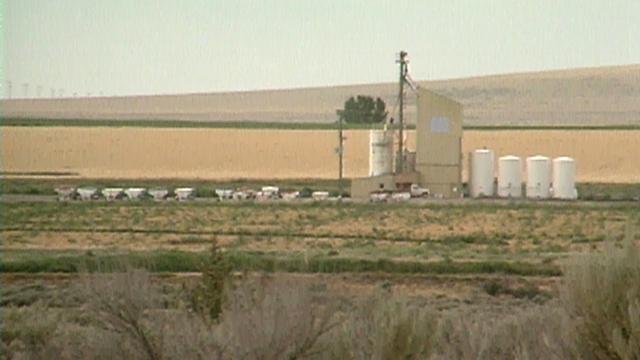
Agriculture is Idaho's primary industry. We depend on it everyday for food, clothing and economic well being. Agriculture looks at the history of this industry in Idaho, starting with the settlers who provided food for the miners. It also looks at two of the state's major contributions to the agricultural industry.
STUDENT OUTCOMES
After viewing Agriculture, students will be able to:
- Appreciate the role agriculture played in the state's development.
- Understand how advancements in technology have changed the agricultural industry.
- Understand that irrigation made fanning possible in many parts of Idaho.
- Describe two of Idaho's major contributions to the agricultural industry.
VIDEO SUMMARY
Agriculture reviews the history of Idaho's leading industry. The program begins with the host, Phyllis Edmundson, at Silver City. She tells students that Idaho's agricultural industry began when miners came to the area and needed food.
Idaho's first farmers faced a number of problems, the biggest being how to get their products to market. Farmers in eastem Idaho had large tracts of land without water, so they developed a system of irrigation. With the leadership of men like Thomas Ricks, Mormon pioneers developed irrigation to farm much of eastern Idaho.
Farmers in northern Idaho had a different problem. They had to deal with the rolling hills of the Palouse. Technology gave farmers better tools. The railroad came to Idaho and farmers and ranchers had a better way to get their products to market. Canal companies formed to deliver water to farms and men like Ira Perrine made Idaho's desert bloom.
Farmers and ranchers today face challenges never seen by those first settlers. There are concerns about pesticide uses and greater demands on the water supply. Still, agriculture remains Idaho's number one industry and continues to grow. The video concludes with a look at two major contributions, the Polypay sheep and the Russet Burbank potato.
PREPARATION EXERCISES
(Before Viewing)
- Have students list all of the different kinds of agricultural products they use each day. Don't limit the list to food.
- Look at a map of the river systems in Idaho. Identify the farm land found along the livers. Discuss how much water would be needed to keep that land productive and how much more would be needed to develop additional farms.
- Discuss some of the ways Idahoans use water.
- List some of the agricultural products produced in Idaho. Discuss who uses these products and how these products get to the consumer.
QUESTIONS FROM VIDEO
(During Viewing)
- How do you get your crops to the people who can buy them?
- How do we decide who gets how much water?
- How do we balance everyone's needs?
- What do you think makes these sheep so special?
- But what good is a great product if no one knows it exists?
VOCABULARY
Agriculture - The science and business of raising crops or animals
Canal Company - A business that provides canals to move water to farm land
Irrigation - A way of supplying water to farm land
Palouse - The rolling hills of northern Idaho
Pesticides - Chemicals used to kill insects, bugs and other animal pests
Promote - To advocate, propose, or sell
Reservoir - A man made lake used to store water
FOLLOW UP DISCUSSION AND QUESTIONS
(After Viewing)
- Who did the first farmers sell to and what problems did they face?
- Why is irrigation important to agriculture? How have people changed the environment in order to use water for agriculture?
- What tools and inventions helped advance Idaho's agricultural industry?
- Why would it be important to develop new breeds of sheep?
- Why would it be important to promote Idaho's potatoes and other crops?
EXTENSION ACTIVITIES
- Research the types of crops grown in Idaho and then draw a map showing where those crops are grown.
- Pick a product and have the student follow it from the farm or ranch to the store.
- Design an imaginary product and have the students figure out ways to promote it.
- Have the students plant and care for a mini garden.
SPECIAL PROJECT
Crossword Puzzle
Design your own crossword puzzle using at least ten of the words below.
You will need to figure out how the words link together, which boxes to
shade, and what the clues will be. If you need to use extra words not
on the list to make your puzzle work, go ahead! You may need to use a
dictionary.
Potential Word List:
- Alfalfa Hay
- Apples
- Barley
- Beans
- Cheese
- Cows
- Hay
- Hops
- Lambs
- Lentils
- Milk
- Mint
- Onion
- Plums
- Potatoes
- Prunes
- Sheep
- Sugar Beets
- Sweet Cherries
- Sweet Corn
- Wheat
- Wool
CONCEPT
What we give to the world often tells much about who we are. Idaho and Idahoans have given a lot to society. Contributions shows a few of the state's famous and not so famous offerings. It encourages students to think about what they can give the world.
STUDENT OUTCOMES
After viewing Contributions, students win be able to:
- Identify several of Idaho's major contributions to the world.
- Recognize the importance of industry in the development of Idaho.
- Understand the value of innovative thinking.
- Realize they have something to contribute to the world.
VIDEO SUMMARY
Contributions begins with the host, Phyllis Edmundson, at the Sawtooth National Recreation Area. She describes the area and tells the students that this is only one of several "gifts" Idaho has given the world. This program looks at just a few of Idaho's major contributions.
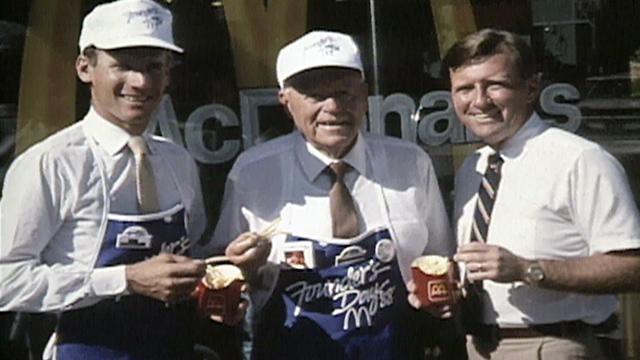
A look at the history of the potato in Idaho includes J.R. Simplot's success at developing and marketing many different potato products.
The video shows Idaho's contributions to the world of animals, as it reviews the history of The World Center for Birds of Prey and the Appaloosa horse.
The video reviews some of Idaho's major industries and their contributions, including Morrison Knudsen, Micron Technology, Albertsons, and the Idaho National Engineering Laboratory.
Idaho has made two important contributions to the world of transportation the Port of Lewiston and Varney Airlines. And finally, Contributions looks at two of Idaho's gifts to music - Music Week and the Lionel Hampton/Chevron Jazz Festival at the University of Idaho.
Phyllis closes the program and the series by encouraging students to contribute to history by contributing to Idaho and the world.
PREPARATION EXERCISES
(Before Viewing)
- Have students define "contribution to the world."
- Have students list various industries or things that Idaho has contributed to the world. Challenge them to think of things that originated in Idaho, i.e., Simplot and frozen french fries, Albertsons, Sun Valley.
QUESTIONS FROM VIDEO
(During Viewing)
What can you do to help save the other creatures that live in Idaho?
VOCABULARY
Dehydrate - Removing the water, dry out
Engineering - The science of building or designing things
Jazz - An American form of music characterized by strong rhythm and accented notes
Nuclear Reactor - A device that produces electricity from atomic energy
Peregrine Falcon - A bird of prey with pointed wings and a long tail
FOLLOW UP DISCUSSION AND QUESTIONS
(After Viewing)
- In what ways have Idahoans helped some animal species develop or survive?
- What are some of the major Idaho industries that are world leaders in their fields?
- How does the Port of Lewiston contribute to the world?
- How did the contributions mentioned on the video have an impact on history?
EXTENSION ACTIVITIES
- Identify contributions not presented on the video. Have students research those contributions and present an oral or written report to the class.
- Have students list three contributions they would like to make to the world and have them explain how they might accomplish them.
- Write letters to executives of various industries throughout Idaho asking for specific information about their contributions to the world.
- Have the students ask questions like, "What countries do the companies export to?" 'What percentage of their product is used outside of the state?""... of the country?" Don't overlook smaller industries or individuals in your area as possible resources.
SPECIAL PROJECTS
Idaho's Contributions to the World
Research to find more information about each of the following companies,
places and institutions.
CONCEPT
Lewis and Clark were the first white men to record a bit of Idaho's history.
As they entered what is now Idaho, William Clark wrote in his journal, "proceeding on through a beautiful country." Early Exploration reviews the opening up of this "beautiful country." This video looks at early explorers and trappers and the trails they opened up for the first pioneers.
STUDENT OUTCOMES/OBJECTIVES
After viewing Early Exploration, students will be able to:
- Recognize several of the early explorers and explain why they came to Idaho.
- Describe the beginnings of a resource based economy.
- Show on a map various trails and the ways explorers moved around the state.
- Appreciate the lifestyle of early explorers.
VIDEO SUMMARY
Early Exploration takes the students from Lewis and Clark's journey to the formation of the Idaho territory. The video begins with the host, Phyllis Edmundson, at Lemhi Pass, the first point where Lewis and Clark entered what is now Idaho.
The video reviews Lewis and Clark's exploration of Idaho and the coming of mountain men. Howard Dutton explains what life was like for those mountain men who trapped beaver in Idaho. He describes a rendezvous, where mountain men and others gathered to trade furs.
Phyllis visits Gilmore, an old mining ghost town. She tells about the early history of mining in the state. Historian and Supreme Court Justice Byron Johnson recounts life in Idaho City in the 1860s. As mining expanded, other businesses grew. Farmers and missionaries settled Idaho. And Native Americans saw their lifestyle being forever altered.
The video concludes as the Idaho Territory is formed. Phyllis visits the Salmon River at the point where Lewis and Clark were forced to turn back and find another route through Idaho. She challenges students to get out and explore like those early pioneers.
PREPARATION EXERCISES
(Before Viewing)
- Discuss why President Jefferson thought it was important to explore the West.
- Show a map of the Louisiana Purchase. Discuss its history.
- Show the path that Lewis and Clark took across the West. Discuss what students know about the journey. Make a list of questions for further study.
- Discuss what resources were available to the early explorers.
QUESTIONS FROM VIDEO
(During Viewing)
- How would you live if you were all alone?
- What challenges would you find?
- Why do you think other people would want to go West?
- Why do you think a little bit of gold would bring thousands of people to Idaho?
- How do you think those nicknames started?
- Were there any finds near where you live?
VOCABULARY
Capital - The seat of government. Boise is the capital of Idaho
Competition - A contest or the act of trying to win
Missionary A person whose job it is to teach religious beliefs
Priority Being more important
Rendezvous A French word for meeting. French trappers who met with suppliers to trade goods for furs called those gatherings a rendezvous.
Resources The raw material available to improve an area
Territory An area of land under control of a government but not yet a state
Trapper A person who hunts for animals using metal traps Treaty An official agreement between parties, usually two countries.
FOLLOW UP DISCUSSION AND QUESTIONS
(After Viewing)
- Why did Lewis and Clark have a hard time crossing Idaho? How did Idaho's geography affect other explorers?
- How did people use Idaho's resources to make money? (i.e. beaver, gold)
- What was life like for the early explorers? How is it different from the lives of today's explorers?
EXTENSION ACTIVITIES
- Have students draw a picture of one of the explorers on a half sheet of white construction paper. Use yarn to make their hair and beards. Underneath the picture have students write a paragraph or two about that person.
- Trace on a map of Idaho some of the routes early explorers took. Measure the route to determine how far they traveled. Start a walking program to walk as far as Lewis and Clark did. Keep records of class progress on an Idaho map.
- Have students list on the left half of a sheet of paper aspects of an early explorer's life and on the right half, how students live today. Discuss how the two approaches are both similar and different. Include topics like how to gather food, how to cook food and how a day is spent.
- Invite a "mountain man" to come speak to the class.
- Have a rendezvous. Have students bring things to trade.
SPECIAL PROJECT
Make an Animal Hide:
- Using brown or white butcher paper, draw an outline of an animal hide.
- Cut it out.
- Scrunch up the paper.
- Wet paper thoroughly under the faucet.
- Unscrunch the paper then flatten out on a table.
- Sprinkle deep brown tempera paint on it. Use a damp sponge to spread the dry paint around on the hide.
- Allow to dry, then decorate if desired.
- Students can also decorate the hide with Native American symbol messages.
CONCEPT
People have been a part of Idaho's history for thousands of years. Early Lifestyles takes a look at how the ancient Idahoans lived. The video also shows how technology changed and improved their quality of life and how the lives of the ancient Idahoans were dictated by the whims of nature.
STUDENT OUTCOMES/LEARNING OBJECTIVES
After viewing Early Lifestyles, students will be able to:
- Compare the ways ancient Idahoans lived, gathered food and survived.
- Explain how nature ruled the lives of ancient Idahoans.
VIDEO SUMMARY
Early Lifestyles looks at the lives of ancient Idahoans and the lives of Native Americans until the time the horse was introduced into their culture. The video begins with the host, Phyllis Edmundson, at Owl Cave, an archaeological site in eastern Idaho. The video presents Idaho's leading archaeologists' views of how ancient Idahoans lived. It challenges students to imagine what their lives would be like if they lived back then.
The video then moves to a discussion of the "seasonal round." Native Americans traveled from place to place to find food depending on the time of year. Emma Dann, a member of the Shoshone tribe, describes the seasonal round and its importance.
Next, Early lifestyles looks more closely at how people of this era lived. Archaeologist Frank Leonhardy describes pit houses and a communal lifestyle. The video closes with a discussion of the impact that the coming of horses had on Native Americans' lives.
PREPARATION EXERCISES
(Before Viewing)
- Have students write a description of what they think life would have been like for the ancient Idahoans. What would they have eaten? What would their homes be like?
- Using a world map and a globe, discuss ways the ancient Idahoans may have come to the area. What would the world have looked like then?
- Have students look up pictures of the types of animals found in North America during the time the ancient Idahoans were first coming to the area.
- Begin to fill in the information display described on the Special Project. Have students fill in as much as they can in the spaces under the headings WHAT WE KNOW: and WHAT WE WANT TO KNOW: After viewing the program, you may be able to add to those two headings.
QUESTIONS FROM VIDEO
(During Viewing)
- How were the lives of ancient Idahoans different from yours or mine?
- What animals do they remind you of?
- Can you imagine what your life would have been like if you lived then?
- What do you think happened to make the first Idahoans' lives different?
- What kind of plants do you suppose they ate?
- Can you imagine living with all your classmates instead of just your family?
- Why do you think the horse made such a difference in Native Americans' lives?
VOCABULARY
Ancient ldahoans- Humans who lived in what is now Idaho thousands of years ago
Archaeology- The study of humans who lived a long time ago
Archaeologist- Someone who studies humans who lived a long time ago
Camas Bulbs- The edible root of the Camas plant, a staple of Native American diet
Hopper-Mortar- A stone (mortar) and bowl (hopper) used for the grinding
Pit House- A circular building used by some Native Americans
Seasonal Round- Moving from place to place to find the food following the seasons of the year and the cycles of the harvest
Succulent- Good, rich, mouth-watering
Woolly Mammoth- An extinct species of elephant which had a hairy coat and long curved tusks
FOLLOW UP DISCUSSION QUESTIONS
(After Viewing)
- What can you learn about ancient peoples by studying archaeology?
Would archaeologists a hundred years from now study the same AND things about us? What differences might you expect? - Discuss the seasonal round. How would it influence daily life back then? How do the seasons influence our lives today?
- Compare and contrast the lifestyles found in the pit house era and the lifestyles of young people today.
- The video mentions several ways the horse changed Native Arnericans' lives. List them and any others. Compare that to how the automobile changed the lives of Idahoans in the 1920s and 30s. Compare that to how airplanes have changed society.
EXTENSION ACTIVITIES
- Fill out third element of KWL sheet.
- Visit a museum or archaeological dig.
- Identify the different Native American tribes in the state of Idaho and discuss what their different lifestyles were like and why.
- Draw or make a pit house showing the various contents. Draw or make a Native American basket, flute or other artifact.
SPECIAL PROJECT
Early Lifestyles KWL worksheet
- What we know,
- What we want to know, and
- What we have learned about Early Lifestyles.
CONCEPT
The world and our location in it has an immense impact on every facet of our lives. To understand more about their part of Idaho, students need to understand more about the state as a whole. Geography will show students the diversity and beauty of Idaho. It will discuss the important concepts of location, place, range, resources and the human environment.
STUDENT OUTCOMES/OBJECTIVES
After viewing Geography, students will be able to:
- Describe where Idaho is in relation to the United States and the rest of the world.
- Identify and describe Idaho's key physical features.
- Appreciate the different lifestyles in Idaho which are the result of the diverse physical features.
- Describe significant geo-economic aspects of Idaho, including how systems of transportation, agriculture, business and industry are impacted by the physical features of the state.
VIDEO SUMMARY
Geography is designed to give students a vision of Idaho. It uses the National Geographic Society's five themes of geography (location, place, human-environment interaction, movement and regions) as its basis. This episode opens with a quick look at some of Idaho's symbols. The host, Phyllis Edmundson, is at the top of Mount Baldy. She begins with establishing Idaho's relative and actual position in the world.
The video goes on to review some of the sites of early Idaho settlements. It then looks at mining and timber areas. Transportation has always been a challenge in Idaho. The video examines the state's river and lake system, focusing on the Snake.
Next, the video looks at Idaho's many mountain ranges and their impact on settlers. It also reviews the states desert areas and range lands. In closing, the video highlights various parts of the state, state government, and lifestyles.
PREPARATION EXERCISES
(Before Viewing)
- Look at maps and globes to help orient students to Idaho's location.
- Have students list all they know about the geography of Idaho. Have them group related items and label each group.
- Ask if students have relatives or friends in other parts of the state. Have them describe how that part of the state looks and how their lifestyles are different.
QUESTIONS FROM VIDEO
(During Viewing)
- How do you think these land forms affected the people who first came to Idaho?
- Where do you suppose they settled?
- How would development change an area's geography?
- Why do you think Idaho's capital was moved from Lewiston to Boise?
- Why do you think it was named the Snake River?
- Can you think of other ways humans have changed the environment?
- What kind of plants grow here?
- What kind of animals live here?
- Why do you think Idaho has two different time zones?
- What's the difference between a city and a county?
VOCABULARY
Geography - The study of the earth and all the living things on it
Irrigation - A way of supplying water to farm land using canals or pipes
Parallel - Imaginary lines that circle the earth to mark latitude
Vineyard - An area where grapes for making wine are grown
FOLLOW UP DISCUSSION
(After Viewing)
- What is Idaho's absolute location? What is it near?
- How are parts of the state different? Think in terms of physical AND features, economic interests, and cultural aspects. Begin a list of QUESTIONS these for each section of the state.
- How has human settlement changed the Idaho landscape?
- How do people get around Idaho? What problems have they encountered in trying to get around? How have they solved transportation problems?
- What is it like to live in different parts of the state? How and why have regions formed? Are there "regions" within your area?
EXTENSION ACTIVITIES
- Make a relief map of Idaho using the following recipe for the base:
Cornstarch clay: 2 parts table salt; 1 part cornstarch; 1 part water. Mix and cook over low heat until stiff. Add a few drops of cooking oil to delay drying. Shape map relief when clay is cool. Dry for 2 days. Food coloring may be added to any portion.
Flour and water paste: 1/4 cup flour; 1 cup water. Mix thin and runny. Add 5 cups hot water, gently boil, stir for 2 3 minutes until mixture thickens. Cool before using.
- Have the students draw on a road map how they would get from their town to three other cities in different regions of Idaho. Have them find an alternative route. Calculate the mileage of both routes.
- Discuss how geography affects the weather. Have students look in the newspaper to find the temperature and forecast for different parts of the state.
- Have the students draw a postcard depicting where they live.
- On the back of the postcards, have the students describe where they live and ask questions about how other people live. Mail the postcard to another fourth grade class in a different part of the state.
SPECIAL PROJECT
Materials needed:
Blank map
Master Map
Special Purpose maps (1,2,3,4)
Mystery Valley
The data on the special purpose maps are accurate to some location in Idaho. Students are to work in small groups, each with a set of maps, to explore the following question: "Where would people settle in this valley and what would they do for a living?"
Each group is given a blank map of the region depicted in the special purpose maps to sketch in their ideas in answer to the question.
Each special purpose map (1, 2, 3, and 4) is given to the group one at a time. The group then rethinks its answer to the question. Give each group about five minutes with each new map. After all the maps have been used and their responses are on the blank outline map, present the following discussion questions to them in the class group:
- What information caused you to change your responses to the question as you received each special purpose map?
- Where do you think this area is really located? (See Teacher's Master Map).
CONCEPT
The land is the beginning of all history. We think of the land as a constant, but Idaho's land is always changing. Geology focuses on three major geological activities in Idaho's history: volcanic activity, floods and earthquakes.
STUDENT OUTCOMES/OBJECTIVES
After viewing and discussing Geology, students will be able to:
- Identify some of the forces that have changed or will change Idaho.
- List different ways in which geology can affect daily life.
- Understand how individuals can take advantage of geological effects.
VIDEO SUMMARY
Geology reviews three major types of geological activity. The video begins with the host, Phyllis Edmundson, asking students to think about how Idaho's land is changing. That leads into a look at geological activity such as lava flows and geysers. There is also a discussion about geothermal energy and its uses.
Not all of Idaho's mountains came from volcanic activity. Phyllis introduces students to the batholith with its diverse mineral accumulations. She asks students to think about the impact the batholith has had on Idaho history.
Idaho's landscape has also been changed by floods. Students learn about three major floods, the Missoula, the Bonneville and the Teton Dam and the aftermath of each one.
The third geological activity reviewed in the video is an earthquake. Phyllis uses the example of the 1983 Borah earthquake to show what earthquakes do to the land and the people.
Phyllis closes by reviewing the three major geological activities. She challenges students to look around at their environment, and reinforces the idea that Idaho's land is always changing.
PREPARATION EXERCISES
(Before Viewing)
- Make a volcano with the following recipe: Combine 1 cup flour, 1 cup salt, 1/2 cup water. Shape dough into the form of a volcano. Let dry. Paint with food coloring as desired. Makes enough for one student.
- Examine different types of rocks. Have students write down words that describe each rock and where they might have come from.
- Have the students stack different layers of clay and use that to show land shifts and uplifts.
- Lead students in a discussion. Ask the following questions:
- What is a volcano?
- Where are volcanoes found?
- Have you ever been in an earthquake?
- Have you seen one on television?
QUESTIONS FROM VIDEO
(During Viewing)
- What would you think if you saw a river of fire? Or if you saw the earth crack?
- Have you ever picked up a rock and wondered where it came from? What it's made of?
- Why do you suppose they call this Craters of the Moon?
- Why does it look like this?
- Can you think of another place in or near Idaho where the earth's crust is thin?
- How do you think people use geothermal water?
- Can you find the batholith on a map?
- Is it close to where you live?
- Can you name any of the changes in the land that resulted from the Missoula flood?
- Did the Bonneville flood leave any rocks near where you live?
- Do you know what an earthquake is? What it might feel like?
VOCABULARY
Batholith -A large amount of rock pushed up from beneath the earth's crust but never breaking the surface
Crater -A hollow area that looks like the inside of a bowl
Earthquake -A shaking or trembling of the ground
Erode - To wear or wash away
Geological activity -A movement or action having to do with the earth
Geologist -A person who studies geology
Geology - The science that deals with the earth and its structure,the plants, the animals and the human life on it
Geothermal-Heated by the molten rock underneath the earth's surface
Geysers - An underground pool of hot water that is shot up into the air
Lava -Melted rock that flows out of a volcano
Legacy -Something left behind for the next generation
Magma -Melted rock which flows beneath the earths surface
Volcano -An opening in the earths surface through which lava, ash and gases flow
FOLLOW UP DISCUSSION AND QUESTIONS
(After Viewing)
- Discuss what geological features are in your area and what activity formed them.
- How can geological features affect our lives?
- What were the three main geological forces presented in the video and what were the effects of those forces?
- Discuss the possibility of geological action occurring in your area today. What kind could it be? What would be the effect? How would everyone deal with it?
EXTENSION ACTIVITIES
- Gather a group of rocks and try to identify each kind. Discuss where they were found and how they got there.
- To demonstrate the effects of earthquakes on buildings, have students build sugar cube structures on top of a block of gelatin. Once a structure, however simple or complex, is built, have students tap the gelatin to simulate an earthquake. Have the students try different structures to determine what kind of building has the best chance to hold up during an earthquake.
- Review how other cultures have explained geological phenomenon by the use of myths and gods. Have students write a mythological story to explain a geological event.
- Place a number of small rocks in the bottom of an empty ice cream box. Fill with water and freeze. Remove from the container and scrape the "glacier" along the ground. Discuss how glaciers changed the land.
SPECIAL PROJECT
Idaho Relief Map
Paste outline drawing on a stiff backing such as cardboard. using different peas and beans, create a montage of Idaho showing the various geological features. Indicate in the legend box which bean or pea stands for which type of feature.
CONCEPT
Most trails into Idaho led out of Idaho. But eventually, people began to settle here. Homesteading looks at the lifestyle of ten year olds as Idaho moved from territory to statehood. Homesteading also looks at modem developments and their links to transportation and tourism.
STUDENT OUTCOMES/OBJECTIVES
After viewing Homesteading, students will be able to:
- Describe the way early Idaho settlers traveled here and the difficulties they faced, both along the trail and once they settled.
- Explain why people decided to stay in Idaho.
- Describe what early settlers' lifestyles were like and how these changed as Idaho became a state.
- Recognize that people continue to move to Idaho to improve their lifestyle, the same reason many of the first homesteaders came here.
VIDEO SUMMARY
Homesteading takes students from the 1860s to statehood and beyond. It also looks at the development of tourism and improvements in transportation links used by today's "homesteaders."
It begins with the host, Phyllis Edmundson, at Register Rock in the City of Rocks. The program starts with a review of the lifestyle of ten year olds in the 1860s and 1870s. It discusses the Homestead Act and the hardships faced by the first settlers. Attitudes changed and the educational system developed as Idaho moved toward statehood.
The video examines this evolution as well as what impact the coming of electricity and other technological advances had on the life of residents.
The last section of the video discusses newer "homesteaders" and improvements in transportation. The states economy grew and new industries like tourism developed. That discussion is highlighted by a look at Sun Valley, Idaho's first tourist resort. The video concludes with Phyllis at the City of Rocks.
PREPARATION EXERCISES
(Before Viewing)
- Have students do a comparison chart showing how their life is both similar to and different from the lives of pioneer children.
- Review a map of the Oregon Trail in relation to the students' home. Discuss how pioneers would have come to the students' area, and how long it would have taken them to get there from St. Louis.
- Discuss the Homestead Act.
- Have students list the ways people traveled around Idaho and some of the problems they would have faced.
QUESTIONS FROM VIDEO
(During Viewing)
- Why do you think so many people moved West?
- Is there a wagon trail near where you live?
- What do you think those first schools were like?
- When did your parents or grandparents first come to Idaho?
- Do you know why they came here?
VOCABULARY
Census - A survey conducted every ten years to count the population
Homestead Act -A law passed by Congress that allowed people to acquire land in the West by living on it and improving it
FOLLOW UP DISCUSSION AND QUESTIONS
(After Viewing)
- How is your life different from that of children in the late 1800s?
- How would improvements in transportation change the course of history? How would it change people's lives?
- Why did homesteaders first come to Idaho? Why do people come to Idaho today?
EXTENSION ACTIVITIES
- Have students write a story in which their families travel from Independence, Mo. to their home town. Select some interesting points along the way that they must include in their story. Stress the importance of solving the problems they would have faced in such a journey.
- Have students pick a resource based product, i.e., gold, timber, food, and list all the jobs that are created in getting that product from beginning to end.
- Select one town in Idaho. Have the class research how that town has changed since it was founded.
SPECIAL PROJECT
- Give each student a copy of the wagon supply list and have them select what items they would pack for a four month trip along the Oregon Trail to Idaho. There is room on the sheet for two of the student's own possessions. Have them estimate the BWU (Bulk Weight Units) of their own possessions.
- Mark off an area on the floor with tape. This will be the class' covered wagon. Have the class work together to decide what will go in the wagon. Cut out squares, circles and other shapes to represent each item. Each student may bring one personal possession. Then, pack the wagon. Once the students have filled out their wagon supply lists or once the class has "packed" its wagon, ask questions like:
- "Do you have enough candles for the trip?"
- "How much food do you think it will take to get you to Idaho? Don't forget you'll need food while you're getting settled in your new home."
- Have the students evaluate their selections.
- Next, pose different problems to the students and see how they would change their selections. Ask questions like,
- "You have to go over a mountain and must give up 100 lbs. of weight. What will you leave behind?"or 'Thieves stole half your food supply. What are you going to do?" If students are using shapes to represent goods, take them off the "wagon." If the students are using the work sheet, cross the goods off their list. Have students calculate what would remain on their wagon by the time they arrived in Idaho.
*The supply list was taken from the game "Pioneers." The "Pioneer simulation kit" is available from INTERACT, P.O. Box 997, Lakeside, CA 92040. It is reprinted with their permission.
CONCEPT
Idaho is a mineral rich state. Mining looks at the history of mining in Idaho, starting with the discovery of gold in the 1860s. Mining in Idaho includes silver, lead, copper, phosphates, uranium and many other minerals. Mining was Idaho's first major industry and it faces many new challenges today.
STUDENT OUTCOMES/OBJECTIVES
After viewing Mining, students will be able to:
- Recognize Idaho as a mineral rich state.
- Understand the history of mining in Idaho.
- Explain the economic and environmental impact of mining in Idaho.
- Identify and describe the problems facing the mining industry today.
VIDEO SUMMARY
Mining reviews the history of the state's first major industry. The program starts with the host, Phyllis Edmundson, at Silver City once one of the state's largest towns and an early center for mining, agriculture and timber.
The video reviews the gold rush in Idaho and the cycle of boom and ghost towns. It looks at the different types of placer mining, i.e., panning, hydraulic and dredging. As placer mining declined, Idahoans turned to hard rock mining. The video examines the development of hard rock mining financed by out of state owners. It reviews the lifestyle of those early miners and some of the hazards. It explains the rise and fall of labor unions, especially the unrest which led to the death of Governor Frank Steunenberg.
The video addresses some of the environmen`tal problems caused by mining and the steps being taken to protect the environment. Phyllis closes by reminding students how important mining has been to Idaho's past, and suggests what role mining will play in the state's future.
PREPARATION EXERCISES
(Before Viewing)
- Review a mineral map of Idaho with the students. List where minerals are found and discuss their possible uses.
- Read a story to the class about the early gold rush, describing what life was like for miners.
- Bring in old mining tools. Have students look at them and guess how they were used.
- Lead students in a concept diagnosis discussion by asking the question, "What do you know about mining in Idaho?" List 20 or so items, group the answers and ask students to label each "group."
QUESTIONS FROM VIDEO
(During Viewing)
- Is there a ghost town near where you live?
- Can you guess what they are? (Four things it takes to hard rock mine.)
VOCABULARY
Boom Town - A town that builds up quickly, usually near a mine or gold strike
Cradle - A mining tool. Sand or gravel is placed in the top of the box-like cradle and while water is run through, the cradle is rocked causing the gold to separate from the dirt.
Dredge - A barge that digs up large amounts of dirt from a pond or stream bed and sifts through the gravel to separate out the gold
Ghost Town - A town where most or all of the people have moved away leaving the empty buildings behind
Hard Rock Mining - A form of mining where workers dig into the earth to find precious metals
Hydraulic Mining - A type of mining where a high pressure stream of water is shot at a hillside eroding away the dirt and gravel to find gold
Mineral - A substance found in nature. Gold and silver are minerals.
Phosphate - A mineral often used in fertilizer
Placer Mining - A type of mining where the miner sifts through sand or gravel to find gold
Prosperity - Good fortune, success or wealth
Sluice Box - A series of long open boxes used to separate gold from sand or gravel
Union - A group of workers who join together to help and protect one another
FOLLOW UP DISCUSSION AND QUESTIONS
(After Viewing)
- Name the different kinds of mining and describe the differences.
- What kind of an impact did different kinds of mining have on the environment?
- Why did unions form? Why did unions decline in strength in the late 1800s?
- What was life like for placer miners? For hard rock miners?
EXTENSION ACTIVITIES
- Visit an old mine location.
- Have the students read a book about a famous miner or famous mine and report to the class what they have learned.
- Invite a miner to talk to the class.
- Contact the local Bureau of Land Management and find out how to file a mining claim.
SPECIAL PROJECT
Panning for Gold
- Fill pan about half full of gold bearing gravel or sand.
- Submerge pan into water, holding the pan with one hand while washing the gravels with the other hand. This will remove the dirt that discolors the water.
- Lower the front edge of pan (riffles in pan opposite your hand) and work pan back and forth in the water, washing the large and lightweight material over the edge of the pan.
- Level the pan and rotate it in a circular motion, washing the water around with the gravels.
- Repeat step 3, continue to wash off the lightweight materials. The gold will remain in the very bottom of the pan and the riffles in the pan will keep the gold from washing over the front edge with the waste material.
- Repeat steps 3 and 4 and 5 until you only have black sands left in the pan. The gold is underneath and you normally can't see it.
- Place a small amount of water in the pan, tip pan up slightly, and swirl the water over the sands lightly, washing the sands down into the lower part of the pan, leaving the gold that is underneath the black sands. Gold is heavier than rocks and sands, thus it will remain in the very bottom of the pan.
- To pick up the gold, tip the pan so water is not covering the gold. With a dry finger, touch the gold (it will adhere) and place gold over the mouth of a small vial filled with water. Gold will quickly sink to the bottom of the vial.
CONCEPT
Idahoans enjoy a good quality of life. But how do we define it and how has it changed over the years? Quality Of Life traces how the lifestyles of Idahoans have changed over time. Quality Of Life also focuses on Idahoans' relationship with the wilderness and how that has evolved.
STUDENT OUTCOMES
After viewing Quality Of Life, students will be able to:
- Explain some of the hardships faced by early Idaho settlers and how advancing technology changed their lifestyle
- Appreciate Idaho's vast resources and how Idahoans have used them to earn a living.
- Describe how people's definition of quality of life has changed over the years.
- Understand the need to balance competing interests in Idaho's resources.
VIDEO SUMMARY
Quality Of Life looks at Idahoans' relationship with wilderness and how it has changed. It reviews how Idahoans defined their quality of life at various times in the state's history.
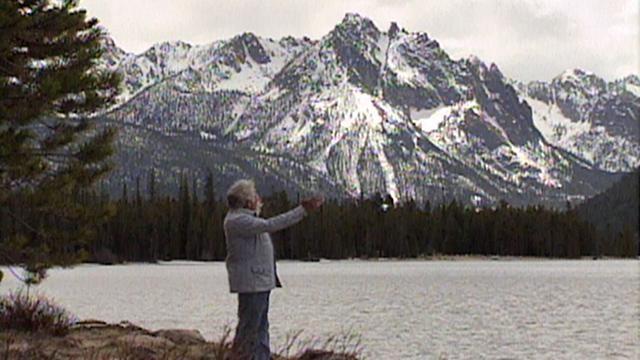
The program begins with the host, Phyllis Edmundson, on Redfish Lake in the Sawtooth National Recreation Area. She describes the hardships faced by the first Idaho settlers and how the wilderness was thought of as the enemy. Those first settlers found ways to tame this enemy and to improve their quality of life with towns and the trappings of civilization, i.e., the theater, schools, etc. Jobs depended on extracting natural resources. Little else mattered other than making a living.
At the turn of the 20th century, residents began to realize that "nature" had value. Nell Shipman produced silent movies in Idaho to promote that concept. The video shows footage from one of her films. Through tourism, some people learned to make money without destroying the wilderness.
By now, the wilderness had gone from something to be conquered to something to be saved. People's quality of life also changed over those years. That too had an impact on people's priorities.
The video looks at various attempts to set aside parts of Idaho's wilderness as advances in technology have changed everyone's perspectives. It concludes with a discussion of how people try to define their quality of life.
PREPARATION EXERCISES
(Before Viewing)
- Discuss what "quality of life" means to each individual.
- Have students list the various things, i.e., telephones, television, cars, in their life that make things easier. Talk about what it would be like not to have those things.
- List all the uses for wilderness.
- Display a map of Idaho showing all the different wilderness areas and discuss the impact of those areas on the lives of the students.
QUESTIONS FROM VIDEO
(During Viewing)
- What is it that makes your life fun?
- What is it about Idaho that makes you want to live here?
- Why would inventions make a difference in the quality of life?
- Why do you think she does that? (Dreena drops a beaver trap into the lake.)
- How much of it (the land owned by the government) should be developed and how much should be left alone?
- How do you strike that balance?
- How much do you set aside?
- How much do you develop?
- And if you set land aside, how many people can use it for recreation before it gets overused?
VOCABULARY
Chautauqua - A company or group in the late 1800s that provided entertainment in the form of plays, lectures and concerts
Development - The act of putting something to use
Legislation - A law that is passed by Congress or another body of government
Molybdenum - A metallic element, often used to strengthen steel
Preservation - Protection from loss, damage or decay
Terrain - The physical features of an area of land
FOLLOW UP DISCUSSION AND QUESTIONS
(After Viewing)
- How was someone's quality of life defined when Idaho was first being settled? How and why did that definition change over the years?
- Why did the first settlers consider the wilderness their enemy.? Why did that attitude change over the years?
- How have people used wilderness and its natural resources for jobs?
- What are the different uses for wilderness and how should we decide which uses have priority?
EXTENSION ACTIVITIES
- Have students clip articles from the local newspaper dealing with wilderness issues. After two weeks, have each student summarize the content of the clippings to the class.
- Assign students different points in Idaho history and have them research and write a report on what a typical day would have been like for a ten year old.
- Visit a national forest. Have students prepare questions in advance about how the government officials maintain the forest. If a trip is impossible, invite a national forest officer to your classroom.
- Select a paper product. Have students find out how the product is made and what any variations of that product are like. Find out how and where it is sold. Is it recyclable? If so, how is that done?
SPECIAL PROJECT
Jeff and Joan want to build a big fence around their 1000 x 1000 foot ranch. But they don't know how many trees they will need to cut down and they don't know how much it will cost. They have come to you for an estimate on tile job. You know the following:
- A medium sized tree produces 10 fence posts.
- You need one fence post for every 5 feet of fence.
- It costs $100 to cut a single tree and haul it to the mill and make 10 fence posts.
- You need to pay workers $200 to build every 10 feet of fence.
- The following worksheet will help you determine how many trees you will need to cut and how much it will cost.
CONCEPT
Religion was one of the driving forces behind much of Idaho's settlement. Religious settlers faced unique challenges and discrimination as they tried to find their place in the state. Religious Settlers looks at their stories and the role of religion in Idaho's history today.
STUDENT OUTCOMES/OBJECTIVES
After viewing Religious Settlers, students will be able to:
- Understand why religion played an important role in the development of Idaho's history.
- Understand why certain religious settlers came into conflict with other settlers and how that changed the course of Idaho history.
- Understand what some religious groups are contributing to today's society.
- Be aware of the diversity of religion in Idaho, including the idea of a "church of nature."
VIDEO SUMMARY
The Mission of the Sacred Heart at Cataldo is the oldest standing building in Idaho, an appropriate place to begin exploring Religious Settlers. The host, Phyllis Edmondson, tells students that religion played an important part in the development of the state.
The video continues with the Native American story of the vision of the Black Robes and the first missionaries in the state, the Whitmans and the Spauldings. About the same time, Father Pierre Jean De Smet founded the mission at Cataldo. The video looks at De Smet's work and the expansion of religion into the Boise basin.
The video explores the history of the Church of Jesus Christ of Latter Day Saints in Idaho, and how the conflicts between Mormons and non Mormons, especially the issue of polygamy, shaped the state's history.
Religious organizations are making a positive contribution to the world and the video shows a few examples. It also reviews the decline of membership in organized religion and the number of Idahoans who take part in the "Church of Nature" as described by Bishop Sylvester Treinen.
PREPARATION EXERCISES
(Before Viewing)
- Have students list some religious reasons why people came to Idaho.
- Locate on an Idaho map various missions and communities founded by religious groups.
- Prepare a list of all the different religions found in Idaho.
QUESTIONS FROM VIDEO
(During Viewing)
- Can you imagine never seeing a book or newspaper before or never being able to write anything down?
VOCABULARY
Mission - A place where missionaries work
Missionary - A person whose job it is to teach religious beliefs
Polygamy - Having more than one wife
Test Oath - A statement an individual must agree to before being allowed to vote
Vision - A dream of what may be the future
FOLLOW UP DISCUSSION AND QUESTIONS
(After Viewing)
- Why would Native Americans be interested in learning more about the religion of the white people? Why would missionaries want to settle in Idaho?
- How did the coming of missionaries affect the lives of Native Americans?
- Why did Mormons face discrimination in the early history of Idaho?
- What is the "Church of Nature" that Bishop Treinen talked about?
- Why do religious settlers of today reach out to help others?
EXTENSION ACTIVITIES
- Make a list of ways religious groups make the world better, i.e., encourage music, help the needy, etc.
- Discuss why religious groups faced discrimination. Discuss why others, i.e., minorities, seniors, women, faced discrimination.
- Have students research and write a report about life at a mission.
- Have students volunteer some time to help someone else in need.
SPECIAL PROJECT
Select one of the symbols of Idaho and draw it on the window or create something entirely different.
CONCEPT
Students can learn about the history and culture of an area by looking at the art it has inspired. Spirit will show students how art has evolved in our state and will profile a number of art forms and artists.
STUDENT OUTCOMES
After viewing Spirit, students will be able to:
- Understand that art forms reflect a culture.
- Appreciate the diversity of art forms found in Idaho.
- Recognize that art has value.
VIDEO SUMMARY
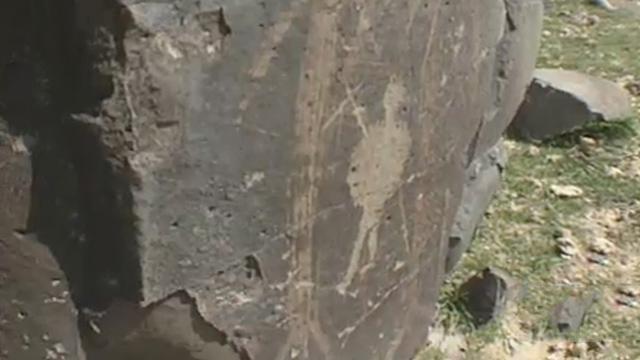
Spirit begins with the host, Phyllis Edmundson, at the McCall Winter Carnival. She reminds students that art in Idaho goes back as far as the rock art of the ancient Idahoans. The program reviews various forms of Native American art and how artists use their medium to express feelings and traditions.
The video discusses how Idahoans have always sought out art but haven't always supported artists. The video reviews the historical development of art, from the fiddler in Atlanta, to early "flowery" poetry, to nationally recognized painter Joseph McMeekin and writer Carol Ryrie Brink.
Spirit looks at the wide variety of artists found in Idaho. It stresses that artists are still struggling to be appreciated. It also shows that the definition of art isnt limited to traditional forms and that anyone could be an artist.
PREPARATION EXERCISES
(Before Viewing)
- Have students list all the forms of art they think can be found in Idaho.
- Discuss why art is important.
- Have students pick one item in the room and explain why this object is or isn't "art."
QUESTIONS FROM VIDEO
(During Viewing)
- Can you think of something practical in your house that is also a form of art?
- Have you ever read a Carol Ryrie Brink book?
- Can you see the art in buildings and chairs and the like?
- Have you ever thought about acting on a stage, on TV or in movies?
VOCABULARY
Architect - A person who designs buildings
Ceramic - Made of baked clay
Sculpture - The art of making figures or designs that take up space or the figure or design that is made in that way
Vaudeville - A variety show of unrelated acts or a piece that would appear in such a show
FOLLOW UP DISCUSSION AND QUESTIONS
(After Viewing)
- What is art?
- How does art play a role in our everyday lives?
- Why is art important?
- How have artists made a difference in the history of Idaho?
EXTENSION ACTIVITIES
- Create a story using Native American like rock art symbols.
- Using scraps of cloth or reeds, have students weave a mat.
- Have students write and perform a play re creating a moment in Idaho history.
- Invite an author, actor, musician or other artist to visit the class.
- Set up an art fair. Have each student select a form of art and display their selections. Invite parents and other guests to "opening night."
SPECIAL PROJECT
Make an Idaho Historical Quilt
Draw a scene from Idaho's history or copy one of the traditional quilt patterns in the inner square below. Cut out the whole pattern and glue your square to those of your classmates in order to make a paper quilt.
CONCEPT
The stories people tell give us an idea about how they lived and what they thought was important. Stories can explain nature or relate memories. Storytelling teaches students that they can learn about history through legends and true accounts. Storytelling also gives students an insight into how some Native Americans related to their world and the realities of a changing culture.
STUDENT OUTCOMES
After viewing Storytelling, students will be able to:
- Describe how stories reflect a way of life and preserve the history of a people.
- Discuss how Native Americans responded to the coming of white settlers and the reasons for their responses.
- Explain the reasons for the sadness many Native Americans felt at being moved onto reservations.
VIDEO SUMMARY
Storytelling examines two Native American legends; a true story about the daily life of a Shoshone woman before white people came, as told in her own language; and a true story about a Native Americans first encounter with white people.
The video begins with the host, Phyllis Edmundson, and some friends sitting around a campfire. She describes how Native Americans used storytelling as a way of passing on history and to explain how their world operated. Nez Perce historian Allen Slickpoo relates the story of Coyote and the origin of the various tribes. Shoshone Bannock storyteller Ramona Walema tells the story of the squirrel chief and how he saved her tribe from starvation.
The video moves into real life stories. Josephine Thorpe recounted her life for BSU anthropologist Jon Dayley in 1968. The video presents Thorpe's description in her native Shoshone, followed by Dayley's translation. This gives students a chance to hear the Shoshone language.
Finally, Emaline George tells her grandmother's story of her first encounter with white people. The video describes the conflicts between Native Americans and white people, and how Native Americans were eventually disenfranchised. George tells how her people are working to improve their lives and are trying to reclaim their heritage. The video ends as Phyllis challenges the students to find stories about their past. She also asks them to think about what stories they will give to their children and what those accounts will teach them about Idaho history.
PREPARATION EXERCISES
(Before Viewing)
- Talk with students about stories that they have read or heard that explain natural events, which may include Greek myths or Indian legends. Ask why people created stories like these and how they are handed down.
- Give students some examples of stories from American history. Discuss how and why these stories began and why we repeat them today.
- Ask students to relate family stories about things that happened long before they were born. Discuss what those stories mean about the history of their family and how they approached life.
- Explain to the students that Native Americans in Idaho created stories which helped them to understand and to live in harmony with the natural world. They also told stories about things that happened in their past to help young people understand and remember. Ask students, while they are watching the video, to see what they can learn about the way these people lived. Then have them see what they can learn about how these people felt about the coming of the white people.
QUESTIONS FROM VIDEO
(During Viewing)
- Why is it important to learn about these stories?
- Do you have a story about your life that you can pass on to your children?
VOCABULARY
Ancestor- A person from whom one is descended
Anthropology- The study of the development of human beings and their culture
Anthropologist- One who studies human beings and their culture
Culture- The arts, beliefs and customs of a group of people
Dwindle- To become smaller or fewer
Legend- A story passed down through the years
Reservation- Land set aside by the government for Native Americans to live on
FOLLOW UP DISCUSSION AND QUESTIONS
(After Viewing)
- What role do stories play in history?
- Why do you think animals played an important role in the legends of Idaho's Native Americans?
- How is the Shoshone language different from English? Why would it be important to hear a story in its original language?
- What stories do you know about some part of Idaho history? What stories can you tell about your history?
- How did Native American's lives change with the coming of white people? How is the relationship between white people and Native Americans changing today?
EXTENSION ACTIVITIES
- Teach students how to tell some Native American stories or legends. (See below)
- Make some illustrations for one of the stories told on the video. Have students re tell the story using their pictures to illustrate it.
- Make a picture book about one of the stories on the video or a new story.
- Have the students ask parents, relatives or friends about their family history. Have them tell a story about something that happened before they were born. Have them tell the story to the class or write a book.
- Invite a storyteller into the classroom to tell students more Native American legends.
SPECIAL PROJECT
Tell a Story
Humans are natural storytellers. Ask students what they did that day and you'll hear stories. The key to encouraging students to tell a story is not to suppress their natural impulses. There are ways to channel your students' natural skills to improve their public speaking abilities. Below are suggestions to improve your students' storytelling skills in the areas of content and delivery. They are in no particular order. And don't forget, above all, to make storytelling fun. It is a skill students will use and enjoy the rest of their lives.
CONTENT
- Use descriptive words.
- Work with a familiar subject the more you know the material, the easier it will be.
- Use metaphors.
- Make sure the characters have "character," make them as real as possible or if they are real, let the audience know who they are.
- Use feeling words.
- Try to get the audience to see what you're seeing and feel what you're feeling.
- Make sure the story has an introduction and a conclusion.
- Remind the student that how they prepare to tell a story is more important then how they deliver it. If they are prepared, they will tell their story well.
DELIVERY
- Revisualize familiar things in the story.
- Use gestures, but only if they come naturally. Don't inhibit or force their use.
- Practice out loud. Practice before a mirror.
- Tell the story as if you are talking to just one friend. Be sincere, enthusiastic, and convincing. Vary the pitch of your voice. Don't label the feeling of speaking before an audience as "fear." Tell students to think of it as their body's reaction to doing something special. Compare it to the excitement of doing something new or the anticipation of receiving a gift. It is something they can overcome. And remind them that everyone has the same reaction.
OTHER LINKS
Circle of Stories - explore a gallery of stories and learn about the history of Native storytelling.
Native American Storytelling - lesson plan exploring Native American Myths and Legend.
CONCEPT
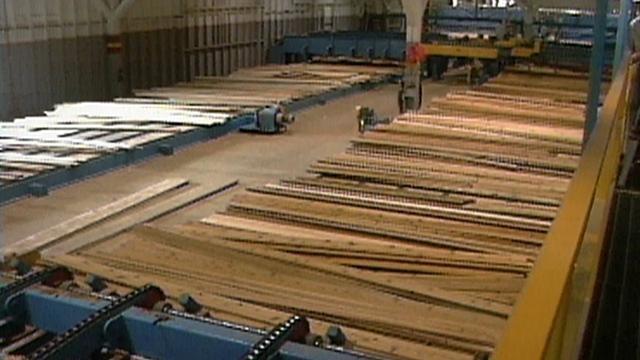
Idaho's trees provided miners and settlers the wood for building homes, fences, sluices and for many other uses. Timber looks at the evolution of the lumber and wood products industries in the state. As Idaho became more populous, the economic value of timber sold outside the local region was recognized. At first very labor intensive, the timber industry became highly mechanized. It now faces a number of environmental issues and problems.
STUDENT OUTCOMES
After viewing Timber, students will be able to:
- Recognize that over two thirds of Idaho's land, about 22 million acres, is forested.
- Understand the vast changes in tree harvesting and the economic importance which timber has had for Idaho.
- Identify the main problems and issues involved in timbering environmental, safety, demands on public lands, etc.
- Appreciate the history of timbering in Idaho.
VIDEO SUMMARY
Timber reviews the history of Idaho's lumber industry and related concerns. The program starts with the host, Phyllis Edmundson, in Silver City. Mining was the first major market for timber. The logging industry started in Idaho in 1840 and grew rapidly. The video examines how those first loggers got their product to market. It shows how a crosscut saw works. It describes how Frederick Weyerhauser came to Idaho to build a lumber empire.
The video describes the impact of wild fire on Idaho's history and focuses on the fire of 1910. It describes "the Idaho Idea," the Boise Interagency Fire Center.
Timber concludes with a look at how timber companies use computers and careful planning to manage their forest lands. It addresses industry diversification into different wood products and presents some of the environmental concerns.
PREPARATION EXERCISES
(Before Viewing)
- Obtain a map showing Idaho's national forests. Locate large commercial sawmill and related industries in relation to these national forests. Have students list what questions they could ask about the forests from looking at the maps.
- Read excerpts from the "Paul Bunyan legend", (author, Jim Stevens.) Talk about what a logging camp must have been like.
- Have students list types of wood and wood products and their uses. Ask how students think those products are made.
QUESTIONS FROM VIDEO
(During Viewing)
- Would you want to work on a log drive?
- Can you name all the different paper products you use each day?
- How do you balance the need for wildlife, clean water, and recreation with the need for timber and all the jobs the logging industry provides?
VOCABULARY
Cooperative - A group of people, businesses or government agencies working together to solve a common problem
Teeth - The sharp points on a crosscut saw
Transcontinental Railroad - A railroad line that went from the East coast to the West coast of the United States
Wood Ties - Planks of wood used as a base for the steel rails of a railroad track
FOLLOW UP DISCUSSION AND QUESTIONS
(After Viewing)
- What were some of the ways early loggers got their product to market? How is that different today?
- Where are Idaho's national forests? Have students locate them on a map. Identify what services are found in each forest
- How do fire fighters put out a wild fire? How do you prevent forest fires? How do cooperatives help fight forest fires?
- What sort of environmental concerns do today's timber companies face? Have the class list some of the pros and cons of an environmental issue.
EXTENSION ACTIVITIES
- Have students research the history of the national forests in Idaho.
Have students contact the local Forest Service, B.L.M. or other appropriate agency to interview workers about land management. - Invite a logger or sawmill worker to speak to the class about how timber becomes lumber or a wood product. Have students research questions before the visit on topics such as the environmental concerns facing the timber industry or how timber companies have changed over the years.
- Make a diorama of how a tree becomes a finished product using actual trees, bark pieces, leaves, nuts and pictures.
SPECIAL PROJECT
In 1890, Phyllis' great grandmother planted a tree to commemorate Idaho becoming a state. In 1990, the wind knocked the tree down. A lot of history happened while that tree grew. Each ring marks a year in the tree's life with year one being the ring in the very center.
Below you will find a slice of Phyllis' great grandmother's tree showing all the rings. You will also find a list of 10 events in Idaho history. Write the date that event occurred on the line next to the event and draw a line from the event to the year it happened on the Event Tree.
CONCEPT
You can tell a lot about a culture from its tools. The Tools video will show students how to make some of the tools used by Native Americans. The video will show how tools changed the people's lives. It will also discuss how some plants were used in their daily lives.
STUDENT OUTCOMES
After viewing Tools, students will be able to:
- Explain a tool is a device people use to extend their ability to accomplish a task.
- Describe how tools have advanced and changed their lifestyles.
- Discuss how tools were made from the available material around them.
- Explain how plants were used in daily life.
VIDEO SUMMARY
Tools begins with the host, Phyllis Edmundson, at Owl Cave, an archaeological site in eastern Idaho. She describes some of the tools used by ancient Idahoans and how improvements in tools lead to improvements in their lifestyle.
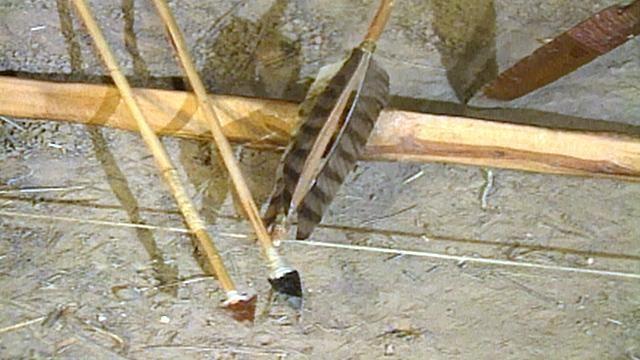
The video follows Gene Titmus as he makes a Clovis point, one of the first important tools of the ancient Idahoans. The arrow evolved from the Clovis point, an important advancement. Jim Woods of the Herrett Museum next demonstrates how an arrow is made.
Native Americans used tools to make some of the basic necessities of life. Dave Bethke shows how hides are tanned into leather. The video finishes with Judy Trejo showing how Native Americans used sagebrush and horsetails for food, shelter and toys.
Phyllis closes the video by challenging students to imagine what archaeologists hundreds of years from now will say about our culture by looking at our tools.
PREPARATION EXERCISES
(Before Viewing)
- Show students a series of unrelated objects, both old and new. Have them imagine they've never seen these objects before. Have them try to describe what they might be used for, based on the physical features of each object.
- Have the students define "tool." Discuss the tools they use in their daily lives and the tools others use.
- Discuss the ethics of finding an ancient artifact and what students should do if they discover one.
QUESTIONS FROM VIDEO
(During Viewing)
- Imagine what it would have been like to live in Idaho thousands of years ago.
- What would you eat?
- How would you get it?
- What would you wear?
- Can you imagine how difficult it was to hunt with just a spear?
- How close to the animal would you have to get?
- And how hard would you have to throw?
- What can you learn about Idahoans today by looking at their tools?
VOCABULARY
Ambush- A surprise attack
Archer- Someone who shoots a bow and arrow
Aromatic- Giving off a distinct odor or smell
Clovis Point- First type of stone weapon used in Idaho, attached to the end of a long spear
Epidermis- The top layer of skin
Foreshaft- The front part of the shaft that attaches to the stone point
Percussion- Beating or striking
Shaft- The body of an arrow
Sinew- The stringy tissue that connects muscle to bone, a tendon
Spearthrower- Atlatl (the Indian word)-A stick with a hook that is used to hurl a spear
Tanning- The process of transforming an animal hide into leather
FOLLOW UP DISCUSSION AND QUESTIONS
(After Viewing)
- What can you learn about a people by studying their tools?
- How did the early Idahoans use the things around them to make tools?
- How did improvements in tools change daily life?
- How were plants used by early Idahoans?
EXTENSION ACTIVITIES
- Have students prepare a menu for a meal without the benefit of modem day tools and food sources.
- Have students create a "tool," either one shown in the video or from a new idea.
- Make clothing or shelter using natural material, as the ancient Idahoans did.
- Explore the advantages and disadvantages of the evolution of tools.
SPECIAL PROJECT
Bring in a "tool" from an earlier age. The tool could be a real artifact or a picture and could include such things as kitchen utensils, woodworking tools or antiques. Have students study it, make a hypothesis about how it was used, why it was developed and what it tells about its owners.
CONCEPT
Idaho's people come from many parts of the world. The World Comes To Idaho shows students the ethnic diversity of Idaho's residents and how economic development brought people to the state. The program discusses the conditions many groups found in Idaho. The video also shows ethnic groups in Idaho today.
STUDENT OUTCOMES/OBJECTIVES
After viewing The World Comes To Idaho, students will be able to:
- Understand that economics played a key role in the development of Idaho's cultural diversity.
- Recognize the cultural differences in Idaho's pluralistic society.
- Develop a positive self esteem and pride in their own heritage.
- Understand and appreciate the contributions of ethnic groups to Idaho.
- Develop a positive attitude and acceptance of other groups in society.
VIDEO SUMMARY
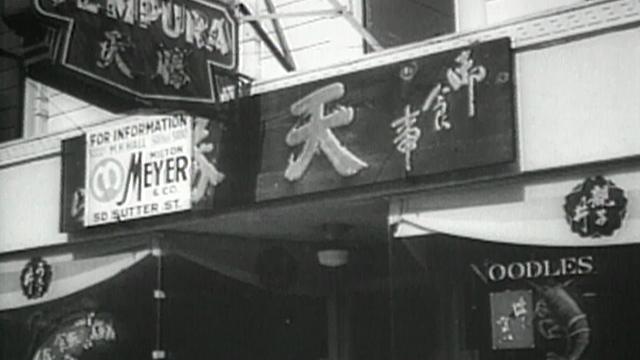
The World Comes To Idaho looks at aspects of Idaho's diverse ethnic heritage. The program begins with the host, Phyllis Edmundson, at the Idaho Historical Museum. Chinese miners were the first large ethnic group in the state. The video describes their lifestyle and the intolerance they faced. The video looks at Japanese immigrants, their early work on the railroads and the internment camps of World War II.
The video then reviews contributions made by African Americans and various European immigrants. The video explores problems faced by Hispanic migrant workers and the efforts made by Hispanics and Basques to keep their heritage alive. Phyllis reminds students that everyone in Idaho can be proud of their ethnic heritage. She encourages them to learn more about their own background.
PREPARATION EXERCISES
(Before Viewing)
- Have students trace their own ethnic heritage by interviewing family members. Have each student place a pin in a world map showing where their ancestors originated.
- Choose a holiday and have the students research how different countries celebrate it.
- Have each student draw a picture of a food item from their own culture. Put all the different drawings together to show what a combined meal might be like.
- List a number of different words and have the students guess where the word originated.
QUESTIONS FROM VIDEO
(During Viewing)
- What are they searching for?
- What brought them here?
- What can you tell about a people by studying where and how they lived?
- Do you know about your ethnic heritage?
VOCABULARY
Discrimination - When someone is treated unfairly for acting or looking different
Ethnic - Having to do with a group of people who share a common culture
Heritage - Something handed down from the past, a tradition
Investor - A person or company that provides money for a project
Immigrant - Someone who moves to a new area
Migrant Worker - Someone who travels from farm to farm to work on crops
Relocation Camp - A site where Japanese Americans were sent during World War II
FOLLOW UP DISCUSSION AND QUESTIONS
(After Viewing)
- Why did white miners discriminate against Chinese miners? How did that discrimination affect the way both groups lived?
- Why were Japanese and Japanese Americans sent to relocation camps during World War II?
- Where did the people of Idaho come from? Why do you think they came to Idaho?
- How can you keep your ethnic heritage alive?
EXTENSION ACTIVITIES
- Have each student select a food or dish and write a report on where that dish came from and how it came to Idaho.
- Have each student find a folk tale from a culture other than their own and have them read it before the class.
- Invite someone to teach the students a folk dance.
- Have students write stories about how their families came to Idaho.
- Invite people from varied backgrounds to tell their stories to the class.
SPECIAL PROJECT
Where Does Your Family Come From?
Research your family flag or the flags of people in your community.
Find where your ancestors originated and draw that flag.
Find where someone else in your community came from and draw that flag.
Then cut out the flags, tape each one to a straight pin and match the flag to its country on a world map.
Stick the flag into the map.
What does the map look like when everyone in your class has put up their flag? What does that tell you about the people in Idaho?