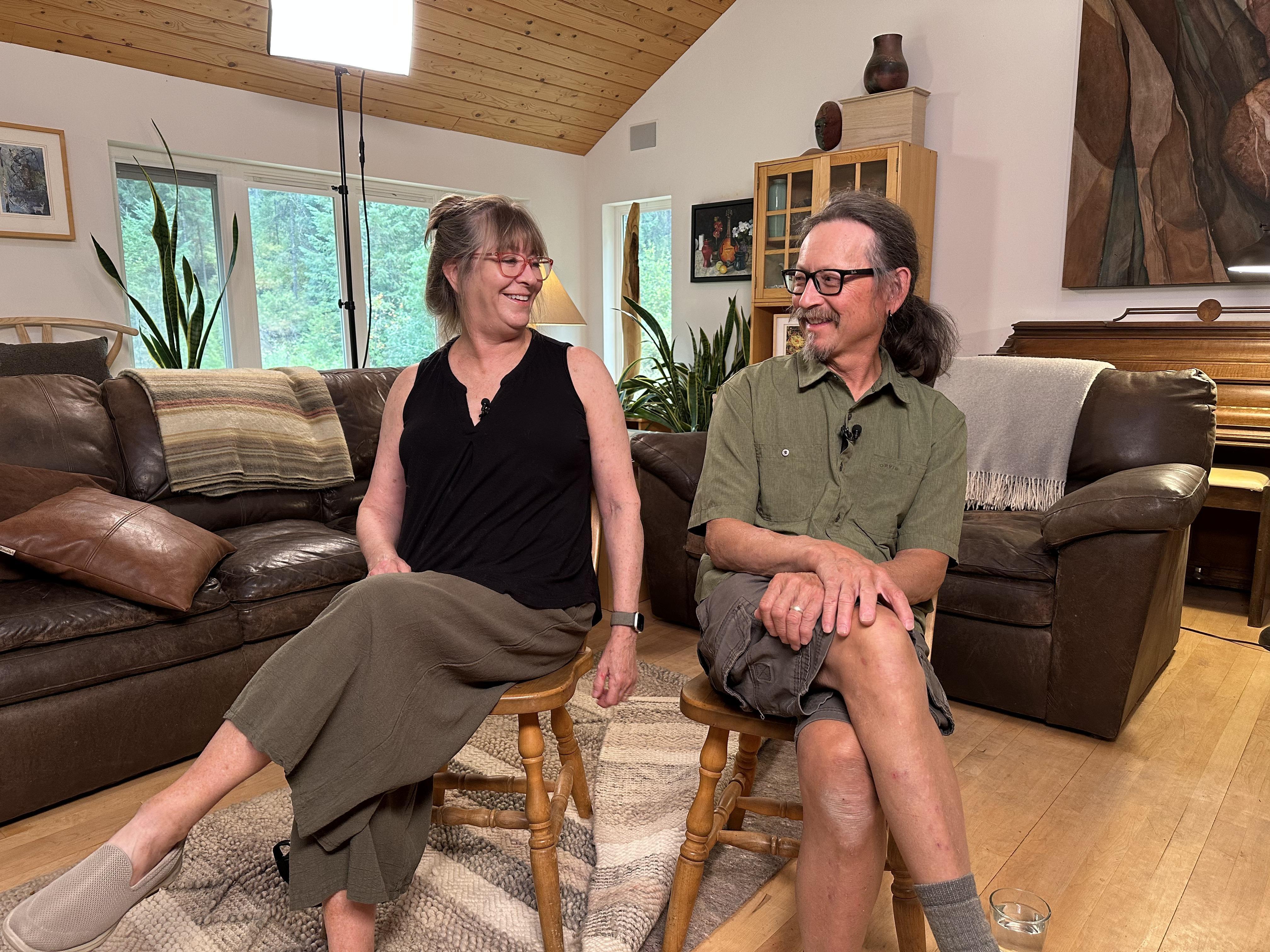
Gail Siegel and Lonnie Hutson are leading lives that many people only dream of. They, too, had those dreams, but were able to turn them into reality.
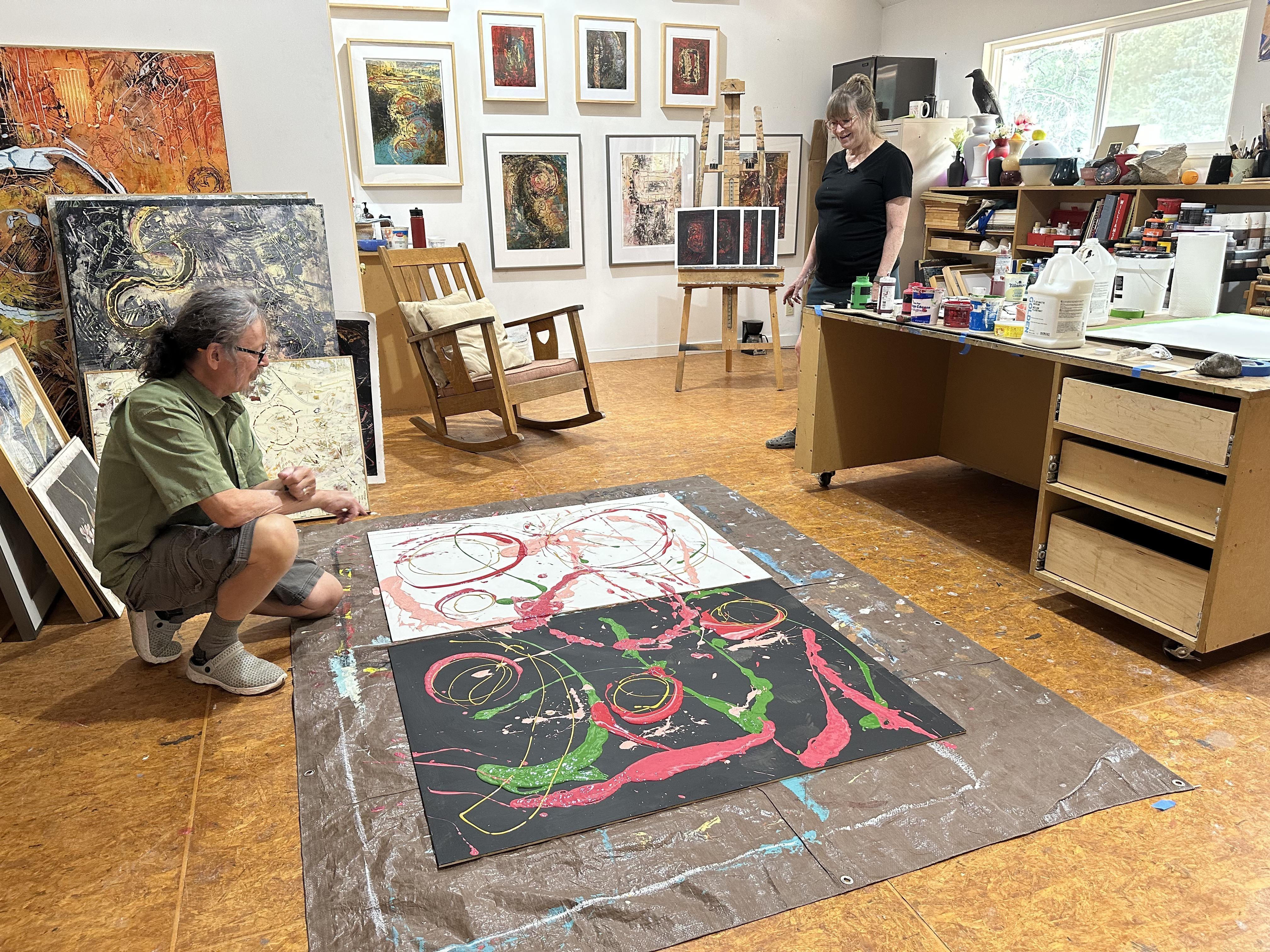
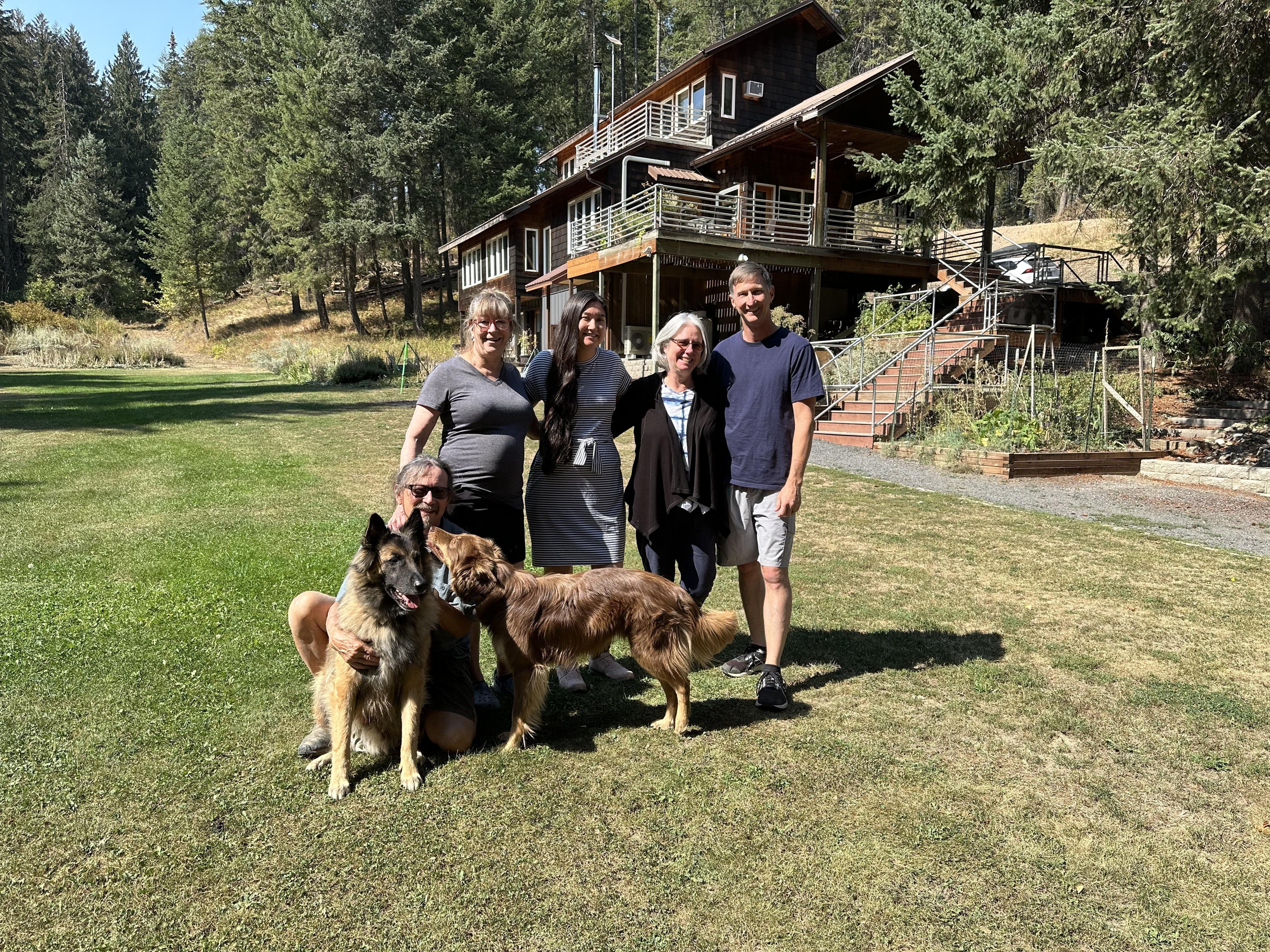
The couple, who met in graduate school at the University of Idaho, live in a house they built near Deary, Idaho, where the rolling hills and agricultural fields of the Palouse transition into forests. Both are also artists who work side-by-side in a nearby studio they constructed. And for several decades they ran trips down some of the wildest rivers in the American West and Alaska.
“We asked each other what our dreams were, and Lonnie's was to have a small river rafting company and mine was to have a cabin in the woods,” says Siegel. “So this is the result of our dreams.”
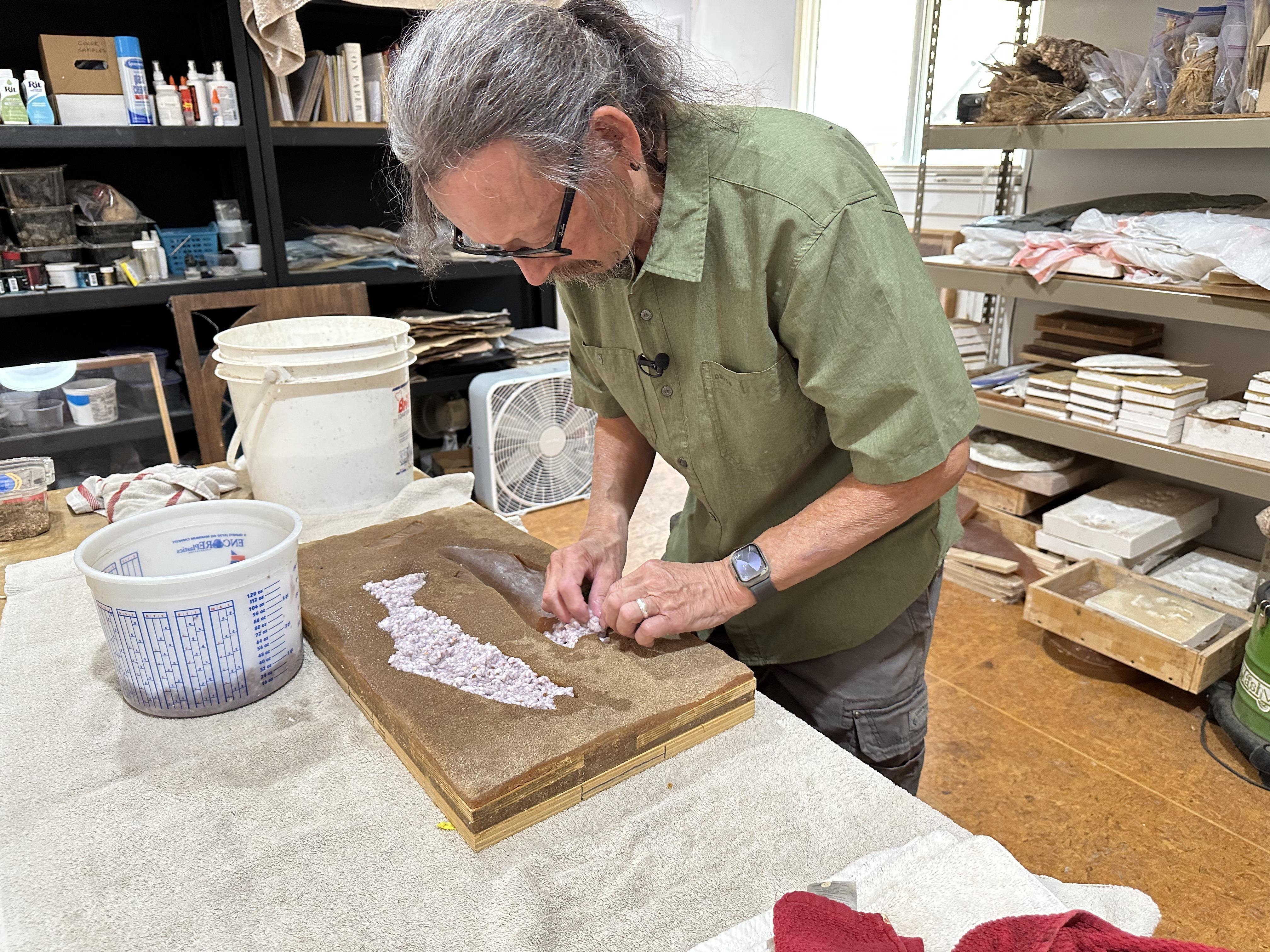
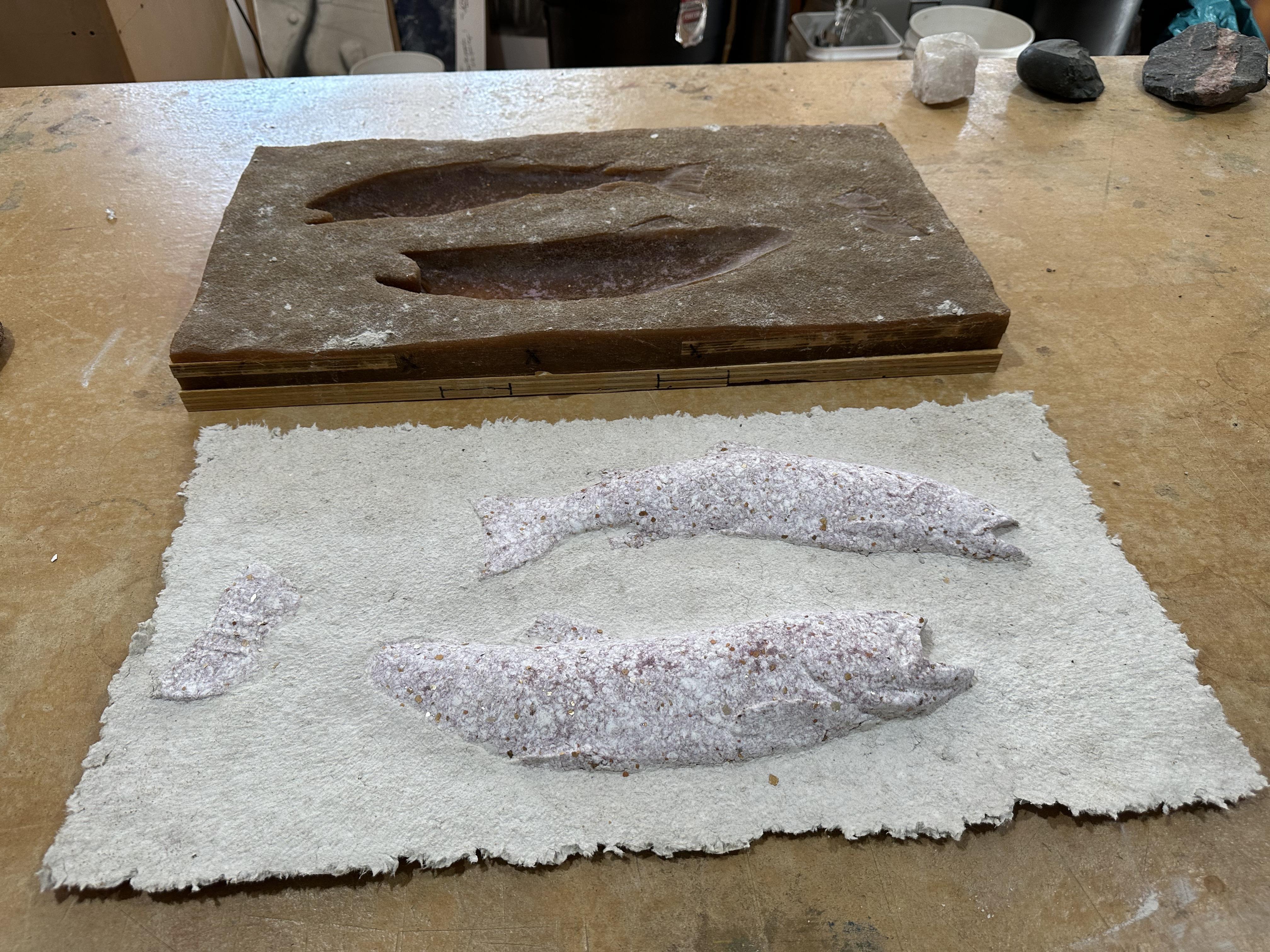
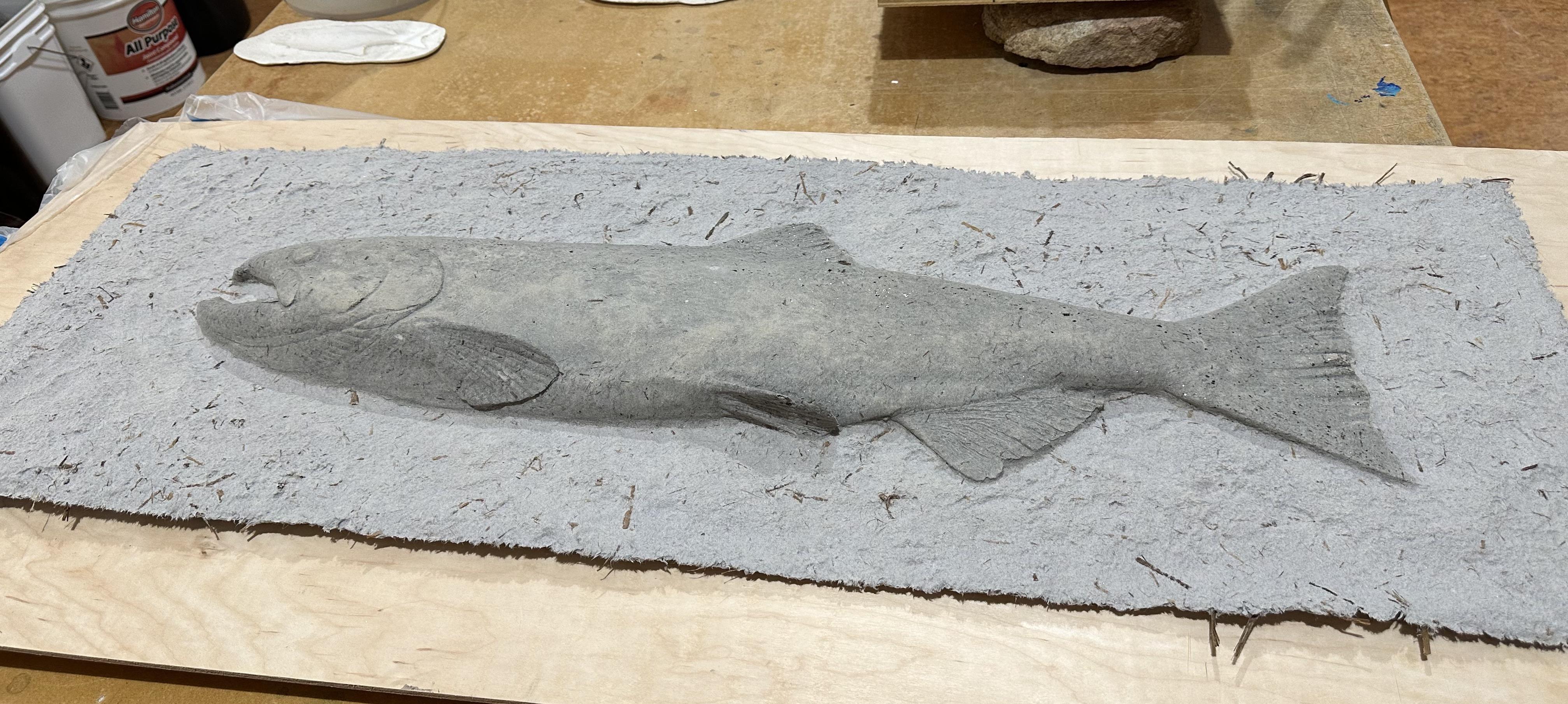
In the summer of 2025, as I was trying to find potential stories about artists in north Idaho for our online art series, createid, I came across photos of Hutson’s extraordinary paper cast fish. Modifying a technique passed down through the ages, Hutson takes real fish (albeit deceased ones), makes rubber molds of them, and then fills those molds with a slurry of paper pulp and other elements of nature from the fish’s habitat, such as grass, mica or even caribou fur.
The result: three-dimensional paper sculptures of fish that are elegant in their simplicity and yet minutely detailed.
“I don’t think anybody is doing any kind of work like this,” says Hutson. “Most people cast paper into rigid, hard molds, and I’m casting my paper into a rubber mold, which is very unique.”
Hutson made paper casts of 38 of Idaho’s native fish, including tiny sculpin and massive sturgeon. The goal was to educate viewers about their importance.
“Native fish are very precious. They really dictate the health of a river,” he says. “And we see it suffering everywhere down here, you know. There's no fish in there anymore to speak of. And then it affects all the wildlife, too.”
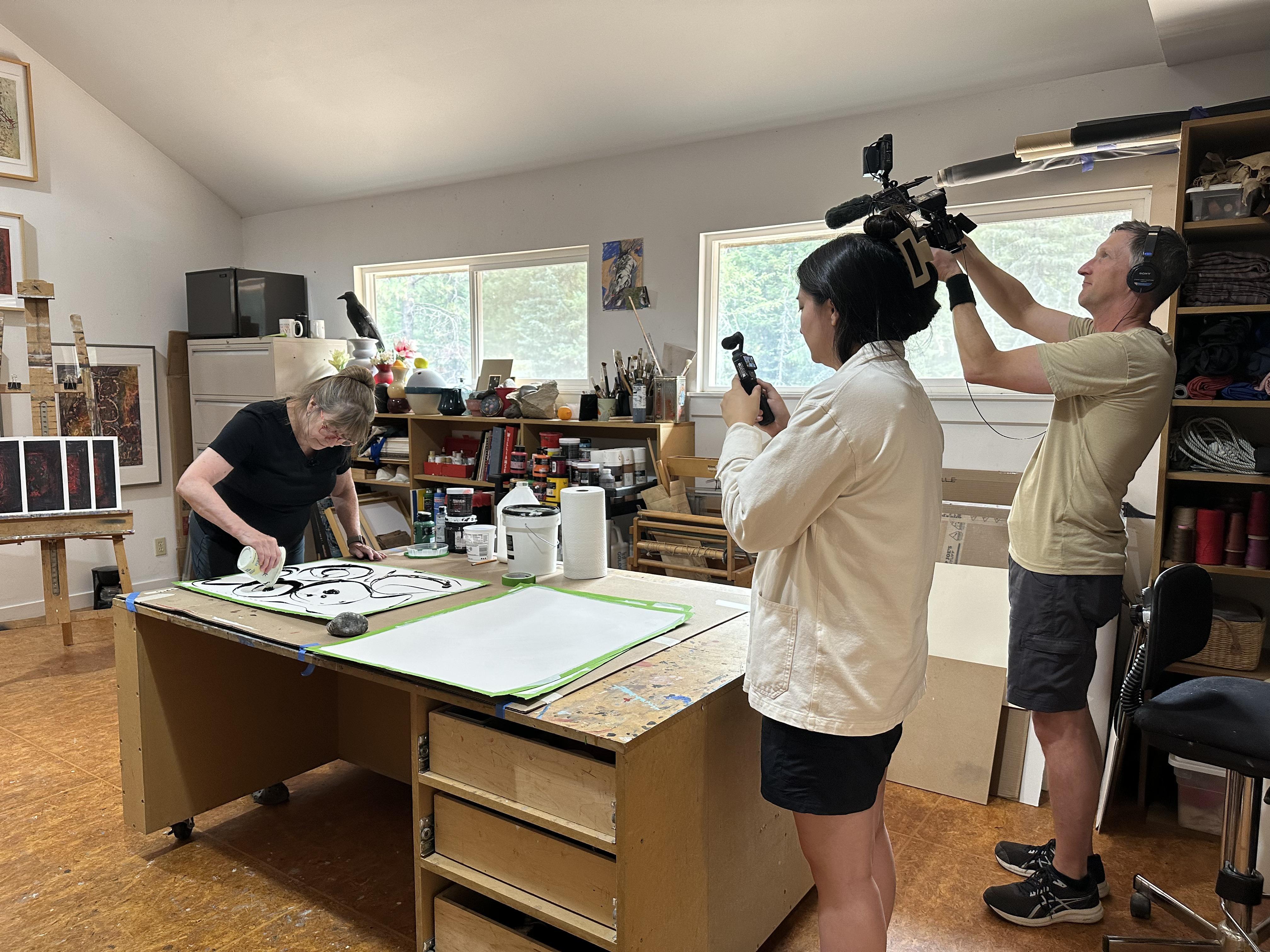
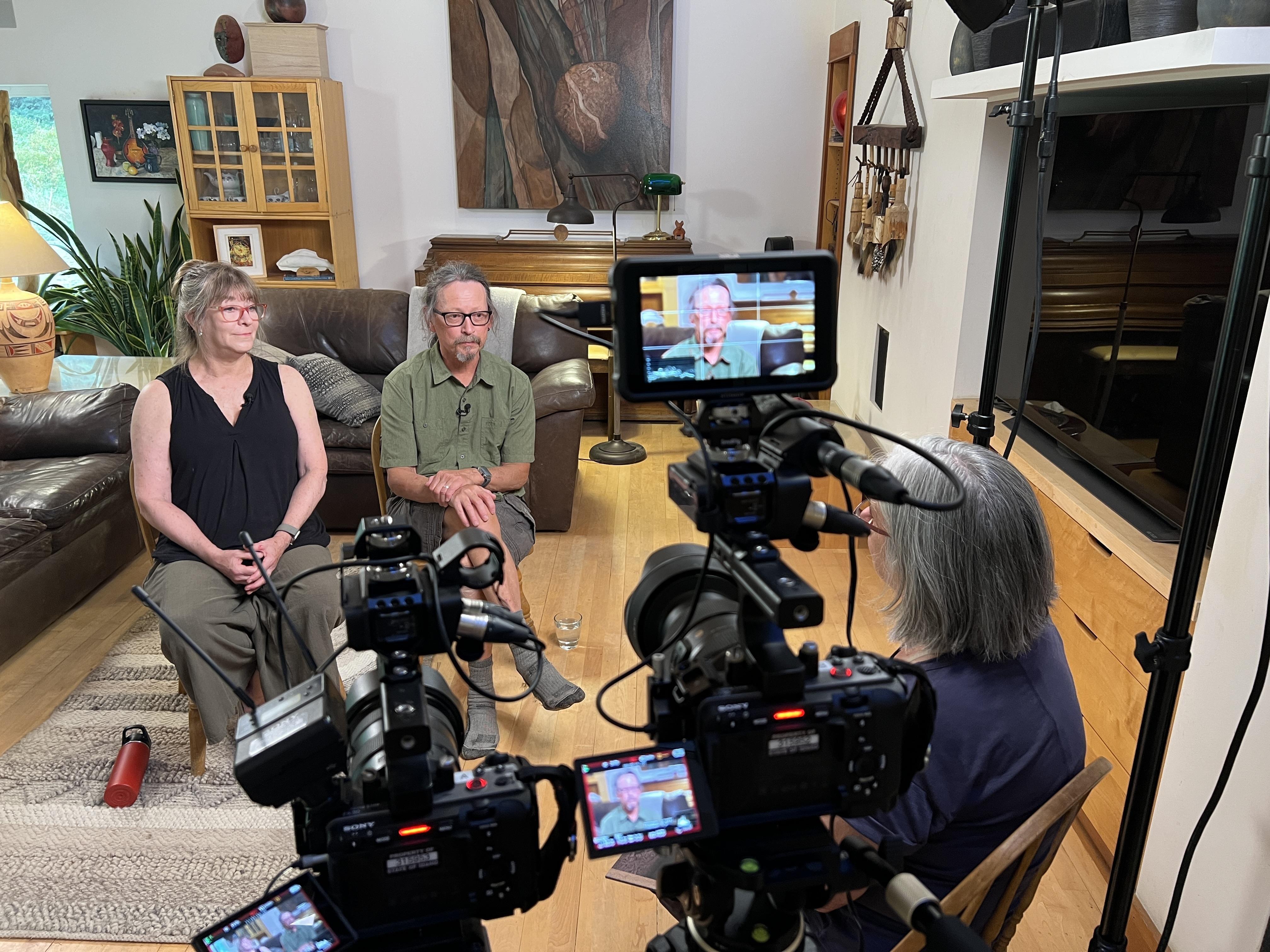
When I learned that Hutson’s wife was a painter and saw images of her intriguing abstract work, I became interested in doing a piece on both of them, including how they work together and separately. Director/videographer Troy Shreve and Associate Producer Hallie Maxwell joined me to work on the story.
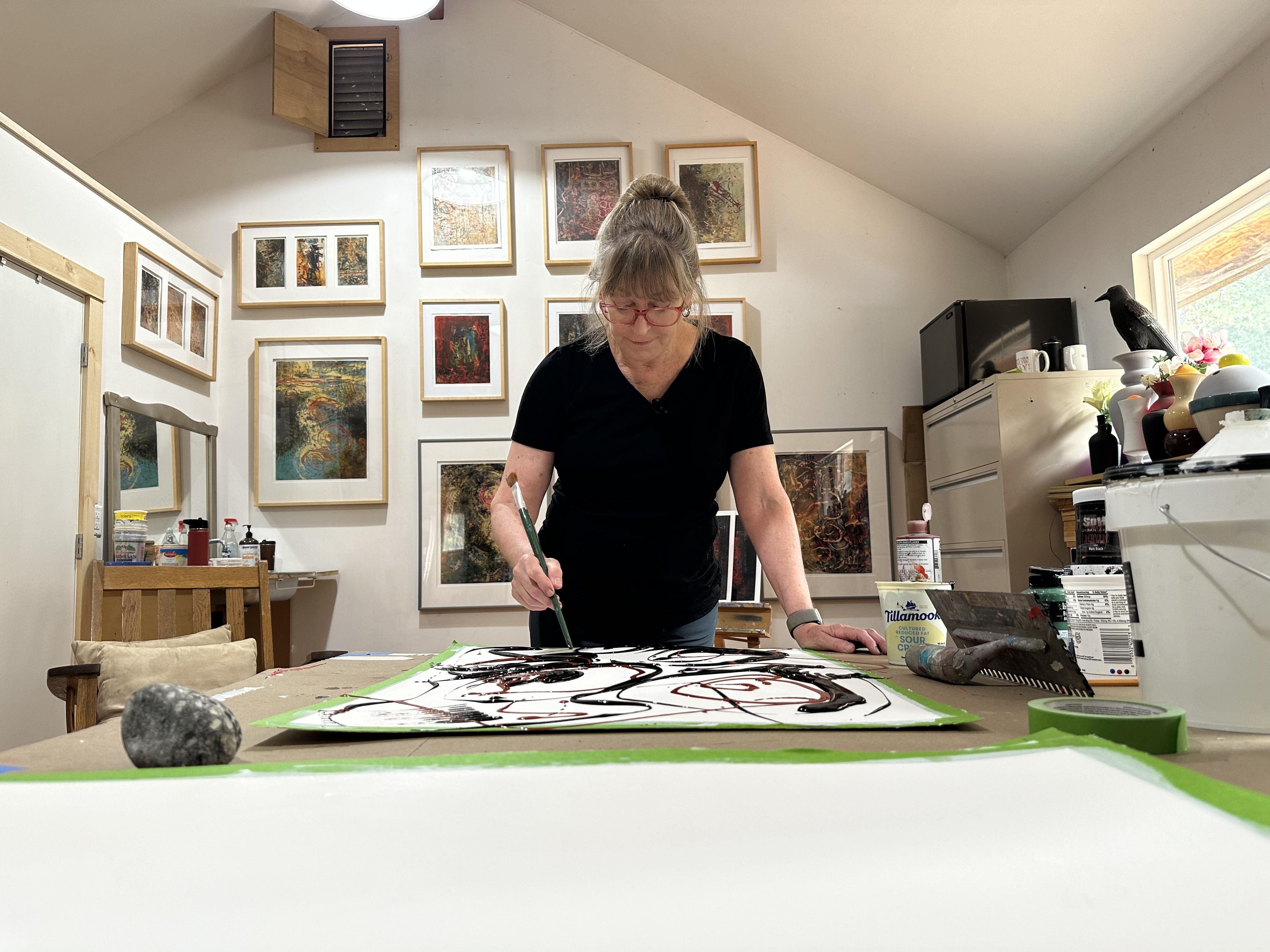
While Siegel’s paintings also explore life under the surface, they do so from a psychological standpoint.
“My work is about layers—about layers of life, layers of experience,” says Siegel. “And my personal interest is to see what rises to the top, these moments in life that are pivotal.”
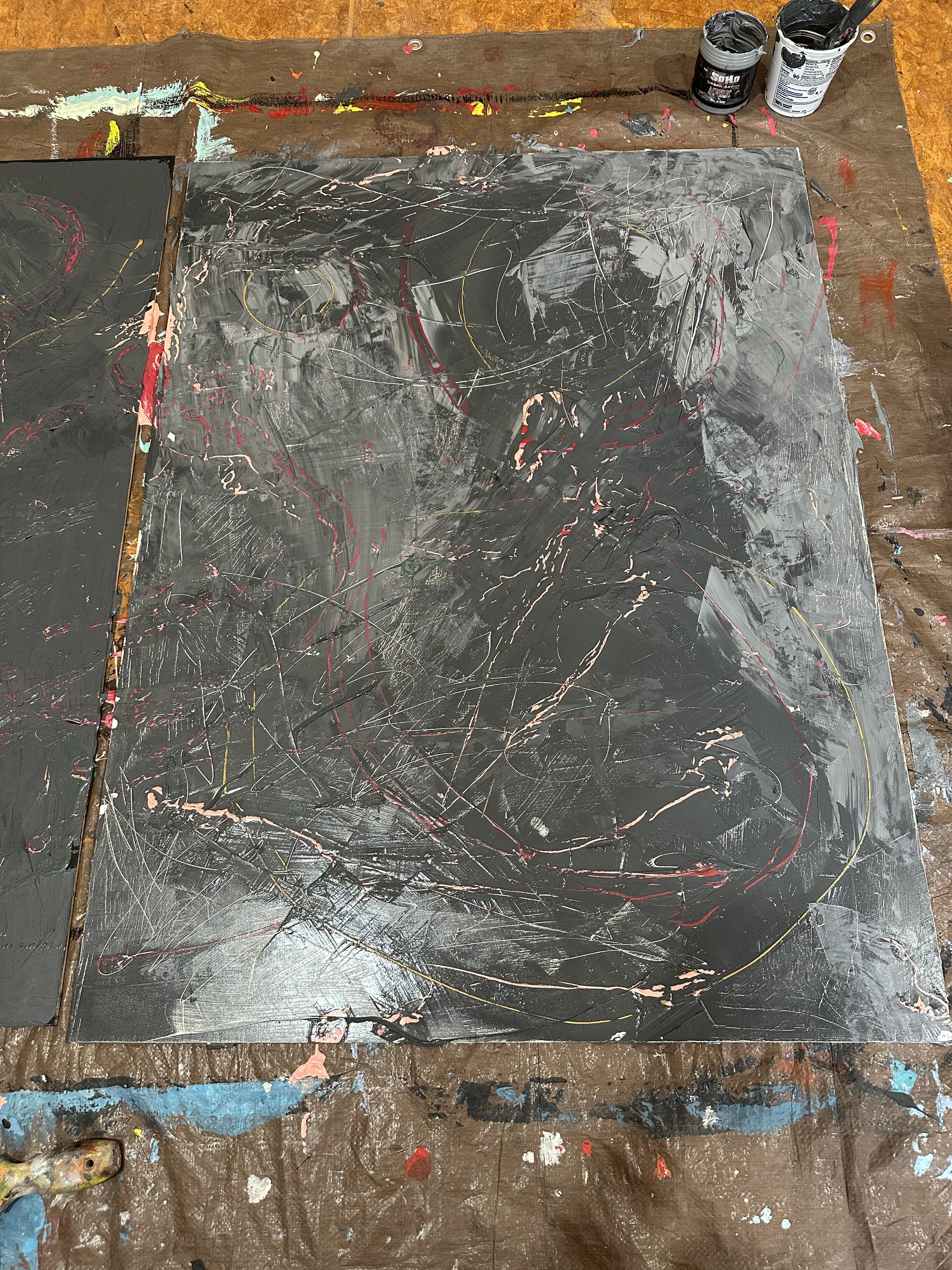
She starts with just some basic ideas of color, and then intuitively and expressively applies paint to the canvas, using wide arm movements. After the paint dries, Siegel makes marks in it, scratching the surface vigorously or making impressions with various objects. She then applies more paint. As the marks and layers accrue, she’s always surprised at what appears.
“It's like silt. I just build up layers and layers and layers and then I excavate. I feel like I’m digging up buried treasure,” says Siegel.
The couple often turn to each other for advice and critique.
“It's very hard to make art in a vacuum,” says Siegel. “And so to have your partner be an artist, you've always got somebody that you can turn to.”
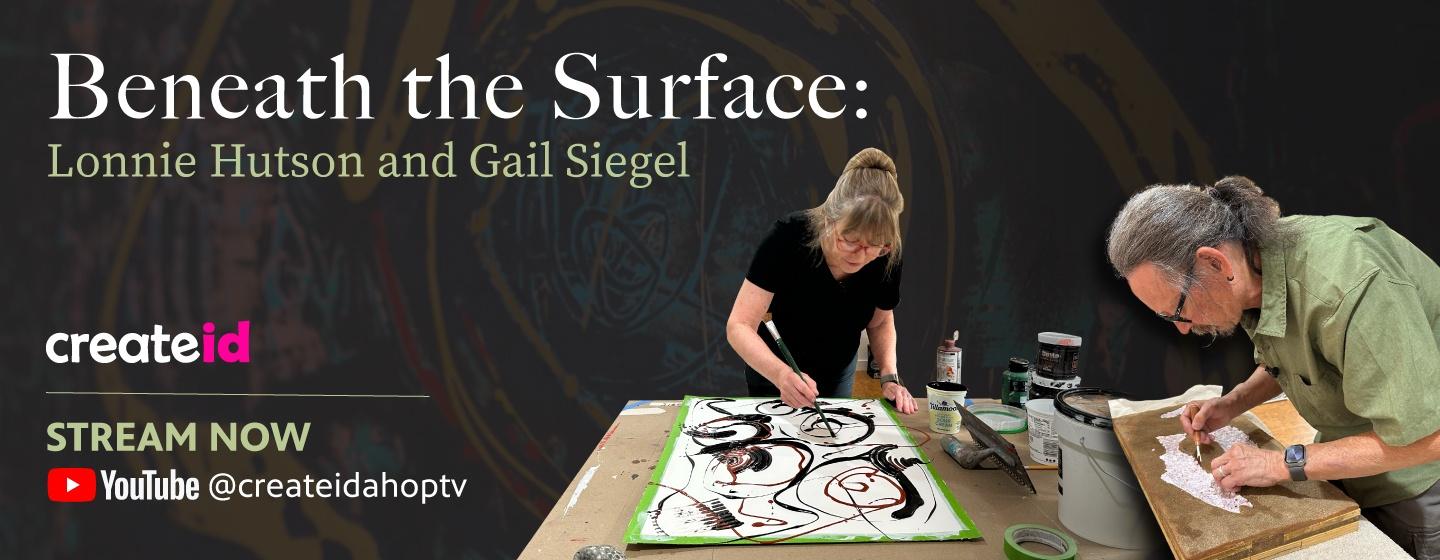
The two have both been featured in multiple exhibitions, and you can see their work here and here. You can watch our createidpiece here.
We had a delightful time with Siegel and Hutson at their beautiful homestead. But it was also bittersweet. You see, this was the final segment of createid for the foreseeable future. Due to budget cuts from the loss of federal funding, the series has been cancelled.
I’m proud that during its short four-year duration, createid won four regional Emmy® Awards, as well as recognition from the national Daytime Emmy® organization. My thanks to Troy and Hallie for their creativity and hard work on the stories, as well as Andy Lawless, the director of our documentary about Sara Joyce. My appreciation as well to the artists who allowed us to film them. I’m glad we were able to shine a light on their work.
Art provides respite, inspiration and invigoration. It can serve as a portal for us to examine not only our own times, but eras long past. And if we look closely, we may find a mirror at the end of that portal.
If you’d like to see our longer videos, including two other stories from the Moscow, Idaho area, you can find them on our YouTube channel: youtube.com/@createidahoptv. And you’ll find even more stories on our Instagram page: instagram.com/createidahoptv.
—Marcia Franklin, Producer